Monday, June 25, 2012

Grow Appalachia Garden Participant at Project Worth Outreach Speaks Out

Good morning everyone.  I hope everyone is doing ok today.  My name is
Alex Sanders and I am an AmeriCorps VISTA at Project Worth Outreach
in Menifee County, Kentucky.  I have asked our participants to write a
short statement that I could post on this blog.  Below you will find the
first of many, I hope.  Also after the statement you will find this week's
recipe.

Hi.  My name is Mary Wallace, my husband and I have gardened most of
our lives butthis is the first time to try container gardening or organic
gardening. I must say I havenot had to battle weeds this year like I usually
do and my plants are thriving. Of course Ido not have long seemingly
unending rows of vegetables to tend either. I do still canquite a bit of my
garden and also freeze lots of things. However in the last couple of years
I have become interested in dehydrating. At first I just did herbs. Then after
a winter we we had several electrical outages I began research on
dehydrating vegetables.  I have been enjoying doing some experimenting.
I now have corn, peas, mixed vegetables, green beans, carrots, squash,
potatoes, tomatoes, celery, cabbage, peppers and mint for tea. Last year
my nephew and 2 other men went to Haiti on theirannual trip to provide
help to one of the churches. They had mentioned how much they missed
having familiar foods while they were there. I offered to send them a bag
of dehydrated vegetables and seasonings for vegetable soup. I told them
when you gettired of local food fix a pot of soup. When they returned I
asked them how the soupturned out and he said great they ate on it for two
days. I then asked when did you fix it?  He replied the first day we were
there, the guys were so curious about the driedsoup they could not wait!!!
So I guess my experiment was a success. I like the idea of having
something that will not ruin if the electric goes out and will last a long time.
Of course there are ways to prepare food before dehydrating and if you are
interested intrying that I may talk about that next time or you can find lots
of sites on the internet. I hope everyone is enjoying this years gardening
with Grow Appalachia as much as I am.


Skillet Cabbage

Brown 1/2 half lb of country sausage {like you do hamburger for spaghetti}
When browned add 1 medium green pepper  {chopped}
1 medium onion {chopped}
1/2 cup chopped celery
Cook for about 5 minutes {slowly}
Add one medium head of sliced cabbage
Cook on medium heat until cabbage is soft or crunchy as you like it
Add one chopped tomato and cook for 5 more minutes
Salt and pepper to taste

This is good with mexican cornbread.

Makes a large skillet full.

My family loves this.  It is a meal in it's self.


Mary Wallace


Note:  I submit these recipes as they are given to me.  Please feel free to
substitute healthy ingredients whenever possible.


On a personal note my family made our first harvest from our Grow
Appalachia garden this weekend.  We harvested a few red potatoes,
green onions and leaf lettuce.  Man, were they tasty.  My wife did the
harvesting and afterward she told me that this was the first time she
had ever harvested anything from a garden, hers or anyone else's. 
We have been married for almost 35 years and I never knew this about her. 
Just goes to show you that when you spend time together you can always
learn new things.  Thank you Grow Appalachia.  Have a great week
and pray for some much needed rain.  I know we sure could use it at
Project Worth Outreach.

Sunday, June 24, 2012

The Old Ways -by Erica at High Rocks

photo by Angelo Jiordano
This week began with a workshop hosted by our partners at the Good Earth Garden, a community garden at the birthplace of author Pearl S Buck.  Gardener Cad Tyler stepped in at the last minute when the originally scheduled speaker cancelled.  He showed participants his seed starting methods using a soil blocker and home-made, temperature-controlled light box.  Other experts were on hand to talk about building soil through mulching and cover crops—the original topic of the workshop.   We shared knowledge gleaned from the writings of Elliot Coleman and from personal experiences about intercropping and green mulches.    
photo by A. Jiordano
We toured the Good Earth Garden and sampled some fresh peas and greens.  The volunteers there keep the garden looking old-timey to reflect the heritage of this century-old garden site as well as the history of even older gardens.  Tomato stakes and bean poles are cut from the nearby woods.  A portion of the garden is planted on mounds of soil in the manner of the Native Americans who preceded the settlers.  The mounds are suited to the wood and stone tools used by the Natives—making a productive plot without having to clear as much land.  The “three sisters:” beans, corn and squash are planted together in each mound, further maximizing the productivity of the land.
The "three sisters" planted on mounds.


At the end of the school year, Hillsboro Elementary students planted parts of the garden and will return in the fall to see what became of their seeds.  The produce grown at the Good Earth Garden is donated to two local food pantries.  


Saturday, June 23, 2012

Scott County Grow Appalachia

Canning Class -  We had our first canning class this week.  Our focus was on safety and proper use of pressure canners.  We gave our participants their pressure canners, and they were thrilled! We are offering more hands-on canning classes for our participants closer to harvest time.
Canning safety class


AGAPE Preschool   - The Children at the Agape Preschool are enjoying their garden.  They colored pages of vegetables that we are going to use to make signs for their garden.  These colorful signs will label the vegetables in their garden. 


Pictures from their garden planting-


n


 Garden Participant of the Week  - Mrs. Phillips


Mrs. Phillips has planted a beautiful 40' x 60' garden that she takes care of herself.  She planted a large garden so that she can share with her friends, family, and neighbors.    Her garden is doing great,  even though it completely flooded this spring!  By the time that the Grow Appalachia team found out that her garden had flooded, she had already dug a small ditch on two sides of her garden to help drain the water.  She is an amazing lady! 

Mrs. Phillips is so generous that I could not leave without my own bag of goodies!


Friday, June 22, 2012

Mujeres Unidas Mark Walden

Squash, Squash, Squash

The squash are on the move and there is nothing more exciting for some of our first time gardeners than to witness the prolific nature of summer squash. Everyone is excited and are sharing with friends and family. Soon will come the time when folks will not answer the front door for fear of someone dropping of more crooknecks and zucchini! The trick will be to just set it at the back door and run!!
All kidding aside summer and winter squash have been an absolute staple in the diets of people of the Americas for thousands of years and cultivated to many of its current varieties by native Americans. There are as many ways to prepare squash as there are varieties of squash. Summer squash is great for a fresh raw meal or sauteed with onions and garlic. Easy to preserve with the use of a deep freeze, just slice it, blanch it, lay it out on a flat surface in the freezer overnight; the next day put it in a freezer container of your choice and your done. Winter squash is and has been a reliable way for folks to have "fresh" vegetables in the dead of winter. If picked at maturity (or close to it) winter squash easily last for 4-6 months in a cool dark area like a basement or root cellar. If you do not have a basement or cellar try a spare room in the house that you don't necessarily need to heat as much as your main living area. So no matter how you feel about squash please make sure that you are encouraging others to plant squash; because there are few/if any other annuals that produce more food per foot than squash.

Garden Pests of another Nature- Pine Mountain, Kathleen Powers

      Wednesday marked the first official day of summer for the Northern hemisphere, and boy does it feel like summer! As we worked in GA participant gardens all week we were definitely feeling the sun, heat, and frustratingly dry skies, as well as one nuisance that I am still feeling the ramifications of as I sit inside at my computer, bugs….. I have never been one to complain about bugs or itchy bug bites, but after these past few weeks I have been commiserating with those who run inside at the first sign of a mosquito or god forbid those nasty little no see ‘em gnats that eat me up.
      As part of Grow Appalachia we strive to use only organic amendments in our gardens to help our vegetables grow. Fertilizer, fungicide, and pesticides that we distribute are all organic OMRI approved, so why don’t we take the same precautions to protect ourselves from those nasty bugs that can make gardening miserable? Most bug sprays are loaded with chemicals that can be very harmful to our health and yet we turn to them immediately when the bugs bite. One common chemical in potent bug sprays is DEET, a chemical which can impair brain function and can cause severe physical impairment after prolonged exposure. I for one am a bit scared of DEET and similar chemicals and would rather not use them when I am out working in gardens every day. So I thought I would research a couple ideas for natural bug protection and share them with everyone.

Mosquito Repellent Plants
Citronella Plant
     Many plants are natural mosquito repellents and can be planted around the garden to help deter bugs and can even be potted and set around outdoor spaces such as porches and patios to discourage mosquitoes from joining you for dinner.

Citronella: a perennial clumping grass that is a stronger mosquito repellent than citronella candles or torches.

Horsemint/Beebalm: an adaptable perennial that gives off a strong odor which confuses and repels mosquitoes.

Marigolds: Hardy annual plants with a distinctive scent that mosquitoes find offensive.

A beautiful Ageratum plant
Catnip: a perennial herb, that has been found to be a stronger mosquito repellent than DEET, leaves can be crushed and rubbed on skin to further repel bugs.

Ageratum: a low lying, annual ornamental with pretty purple blooms, Ageratum secretes Coumarin, a substance commonly used in mosquito repellents

Homemade Bug Sprays
     Another way to repel bugs naturally is with the use of homemade bug sprays. There are many different recipes out there for all different kinds of natural bug sprays, most of which include essential oils using herbs such as lemon balm, mint, rose, etc.m which you can buy online or in many natural foods stores, or follow Jessica at BDVP’s example and make your own infusions: http://growappalachia.blogspot.com/2012/06/make-it-take-it-part-2-at-bdvp-jessica.html.
These oils are then combined with various other ingredients which may include water, apple cider vinegar, etc. to make an effective and safe bug spray.

Natural Bug Spray #1
1/8 c. apple cider vinegar
1/8 c. rubbing alcohol or (yes, I’m going there) vodka
1/8 c. distilled water
25 drops eucalyptus essential oil (1/4 tsp.)
25 drops citronella essential oil (1/4 tsp.)
50 drops peppermint essential oil (1/2 tsp.)

Natural Bug Spray #2
3 1 ⁄2 ounces (which is basically 1/3 cup) of Witch Hazel
A small bottle of homemade bug spray will go a long way!
1 ⁄2 teaspoon Lemongrass Oil
1 ⁄ 2 teaspoon Eucalyptus Oil
1 ⁄ 2 teaspoon Citronella Oil

For both recipes simply combine all ingredients in a small spray bottle and shake well before using.

This website has some great bug spray “recipes” of varying potency: http://wellnessmama.com/2565/homemade-natural-bug-spray-recipes-that-work/

     Other advice for avoiding pests include eating garlic, onions, and bananas (not all together though!) drinking a TBSP of apple cider vinegar each day, taking Vitamin B1 supplements, and even rubbing pure vanilla extract directly on your skin. Who knows if these home remedies work, but I for one am willing to give it a try if it means avoiding itchy bug bites and the use of harsh chemicals.

Wishing you all happy and bug free gardening!

Henderson Settlement / White Oak Happenings

Food Pantry Garden
We had a work group from South Carolina work in the Food Pantry and Community gardens.
Community Garden
Cleaning Cane Poles for the gardens

Judy showing Tyler where she wants him to plow


South Carolina Kids helping in Judy's garden.


RAISED BEDS @ LCAAHC

                                                 Raised Beds
                                 Cabbage, Lettuce, and Onions
                                                     Large Onions
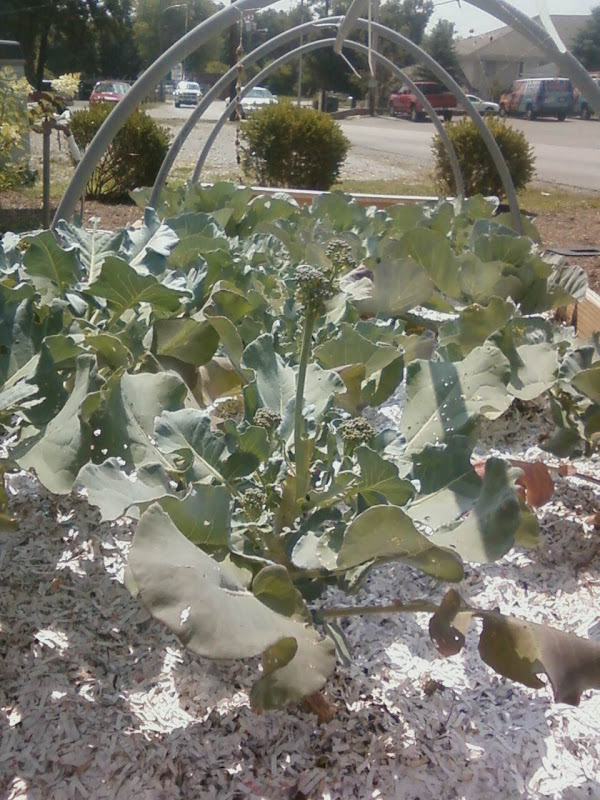
                                                    Broccili

These are the raised beds here at the office, (lcaahc) were we have our meetings. We have been complimented on these every day. We are located at a 3way stop in the middle of town. As people come and go, some we know and some we don't will just say "Love what u all have done with the place, the vegtables look yummy." Others will stop , get out, walk in just to say "hi, and i'm gonna swip me an onoin one of these days!" They are just kidding of course.
It just feels great to know that so many people pay attention and see that u can grow something to eat just about anywere. No matter if you live in town, in an appartment, or mabe even a subdivision. You can still grow your own vegtables.
We hope that this encourages the folks who feel like they can't grow a garden, because of thier living arrangements. That yes they can. With a small box like these, a little dirt, and the determination to want fresh veggies. It will happen.     
                                             06-22-12
                                        Salena Henson