Showing posts with label ASD. Show all posts

Wednesday, October 24, 2012

Baby Leek! ~ More fall planting and tilling in Abingdon, VA

Heather here.

Our focus right now is recruiting participants for next year.

I've been handing out flyers at the food pantry and the food pantry staff distributes them as well.


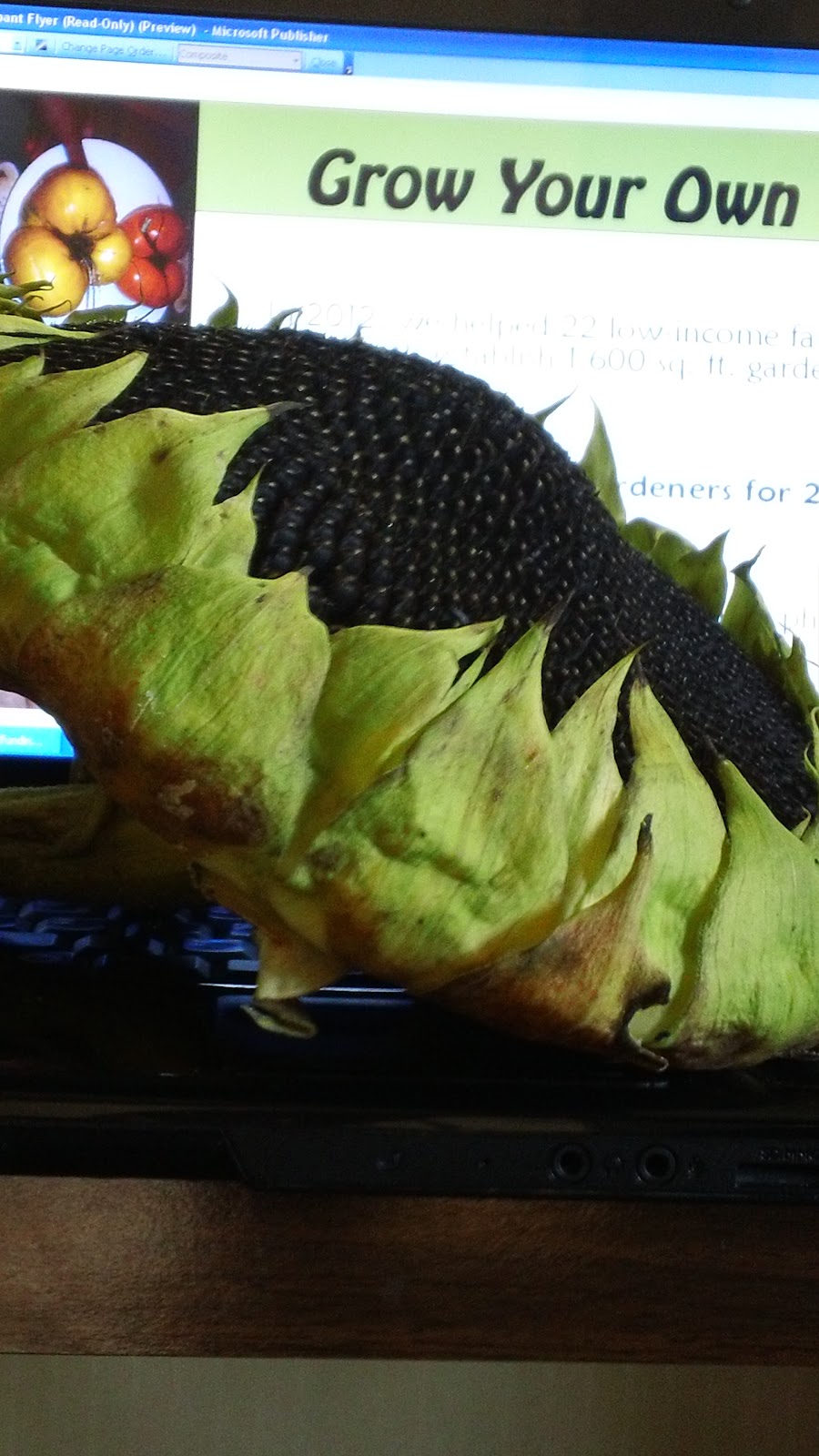
The flyer, and a lovely sunflower full of seed for next year (!)


I tilled up more of the garden and we seeded Austrian Winter Peas, and planted leeks, shallots, and lettuce. We will put bales of straw around the lettuce and prop a window on top for a makeshift coldframe. 


We shoveled all the tilled-up soil from the pathway and made a large mound, hoed 2 furrows and planted the little baby leeks 6'' apart. As they grow, we will rake soil into the furrows. We will also mulch the crap out of the leeks and shallots to aid in their over-wintering experience. 

Little lettuce squares


Before, and during, the tilling I was hemming and hawing and getting a bit worried and out of sorts as I always do when I think about soil compaction, all the different schools of thought on tilling...questioning my relationship to the soil and how much I really understand, but one of our volunteers, Debbie, actually took a photo of the soil to send to her friend as she said this was some of the best soil she's seen and she wanted to "gloat about how lucky [she] is to get to garden in it". 


Our garlic arrived...all 8 varieties. So excited. Need to do some onion research...

And our oats keep on keepin on.  


That's it that's all! 

Friday, September 28, 2012

A fairy carpet of little oat sprouts is a pleasing site for sure. -- Abingdon, VA


Heather here. At our latest workshop we seeded about half our garden in oats. The other half, right now still full of fall crops, will be seeded with Austrian winter peas. Below is the handout that we created for Grow Your Own gardeners. 


Cover Crop Time

Benefits of cover crops:

  • Protect the soil from weather.  Bare topsoil can easily be washed away by rain, wind, snow & ice, depleting organic matter in your garden.
  • Cover crops add diversity to your garden, especially during the winter months and create habitats for beneficial insects
  • Winter cover crops are tilled into the garden in the spring, adding valuable organic matter which improves soil tilth—health and structure.
  • Legume cover crops, such as clovers and peas, add "free" symbiotically-fixed nitrogen.  Nitrogen is an important fertilizer needed for healthy plant growth.
  • Deep rooted cover crops, such as rye, can break up hard, compacted soil, while large leaved cover crops such as buckwheat can help reduce weed pressure.

It depends on the needs of your field or bed to determine what cover crop is “best”. For example, is weed pressure or nitrogen deficiency more of an issue? Leguminous crops add more nitrogen while grasses like oats are better at blanketing out weeds if planted thickly.

We have chosen to sow oats this fall as they will “winter kill”— meaning they will die back in the winter and be easier to till into the soil in the spring.

Notice that there are many patches in the EFIA garden that are not ready for a cover crop yet.  In order to get the benefits from a grass cover crop and a leguminous cover crop, we will plant oats in bare soil areas now (September) and sow Austrian winter peas in spaces where crops have yet to be harvested later in the season (October).

Planting:

The key is to distribute the seed evenly over bare soil areas.  This can be done with commercial seed spreaders for large acreage or by hand for smaller gardens like ours. 

When planting oats alone, not mixed in with another crop, 100lb/acre is sufficiently thick. Each garden is about 1/27 of an acre, so you would need roughly 4lb to cover your entire plot. Some of you have larger gardens and some of you are still growing other crops. Plant the oats in any blank spots you have and you can fill in the holes with Austrian Winter Peas that we will be giving out later in the season.

We tilled our ground once before seeding the cover. If you would like to borrow our tiller let us know. Otherwise, make sure your bed(s) are free of all crop residue and broad fork and hoe up the soil to loosen it up and get it ready for planting. Rake in little furrows all down the bed and scatter seed in a sweeping motion. Rake soil over the top and water in. Plant your oats as soon as possible, and certainly NO LATER THAN OCTOBER 4th. The oats need time to get growing to in order to actually cover the ground before cold temperatures set in!


Isn't he sweet? Volunteer Drake built shelves for us in the truck/shed. I wish we could  get that hand truck out of there. It is ruining the vibe. 


That's it that's all. 

Thursday, September 13, 2012

ATTN: All Grow Appalachia Sites -- Abingdon, VA


Historical and current evidence reveals that those who belong to a middle class bracket and above at times believe low-income people are lazy. How can we address this issue through our work? What techniques do Grow Appalachia sites employ to build bridges between various low-income groups and others, and examine issues that are interconnected with low-income situations—issues such as health and transportation? 

For example, participants may want to garden more and volunteer more or regularly attend workshops. But sometimes they won’t get there because they literally cannot get there—no access to reliable transportation, work or childcare schedule conflicts, or illness and disability prevent involvement or inhibit successful participation in the program.

We will be leading a discussion program with community garden programs for low-income residents throughout the Appalachian region. We are interested in what other Grow Appalachia sites are doing so we can improve our own performance and impact of our own program, and also help remove road blocks or build resilience into other community gardening programs that focus on meeting food needs immediate and otherwise and teaching skills. 

One idea we had was for working groups for low-income residents and people belonging to other socioeconomic class groups- safe situations where people can learn from each other each getting something out of it—attitudes can change. We have not held workshops with program participants and others, so we would love to know you all's experience with that. 

Our goal is to  create opportunities for change, growth, and examination of perspectives while simultaneously creating multifaceted connections between healthy people, a healthy planet, and living consciously. 

So, in a nutshell, how do you combat the categorization of low-income people as lazy and unreliable? And if the unreliability is admitted to be linked to larger issues such as health, how can we help people live healthier? 

What a fascinating way to grow -- Abingdon, VA

Heather here.


We've been saving seed and studying flower drying around these parts. Celosia is dropping seeds like mad. We've also been doing a lot of work on our project model/plan/toolkit. It really is a lot to think about.

Look at that little idea!


Our last three workshops of the season will be:

Cover Crops and Talking About Next Year

We hope to have a good lesson on putting your garden to bed for the year and also want to evaluate this season with participants and find out who wants to participate next year. This will influence our recruiting for next season, which we hope to begin in October.

Garlic Planting

We'll be planting a softneck and a hardneck variety. We'll have to make sure participants leave one chunk of their gardens free of cover crop for garlic. I'm excited to plant a crop that I can just let do it's thing over winter. We hope that people will continue to save their garlic over the years.

Dried Flower Wreathe-Making

There is a surprising amount of money to be made with cut flowers and dried flower arrangements. Plus we'd like to talk more about the importance of flowers in the garden and all their different properties. Drying flowers properly and saving seed will also be discussed.


Fasciation-- The spreading of the apical meristem, or growing tip, in a perpendicular direction. Results in cresting and gives cockscomb that intriguing shape. 
Until next time.

Tuesday, September 4, 2012

Spotlight on Gardener Tony in Abingdon, VA

Heather here--

Feeling pretty visually inclined today. Tony, one of our gardeners, was kind enough to share his pictures with me of his family's gardening adventures. They really make me happy because that's what the program is all about--families working outside on something they care about, taking care of themselves, learning, growing, and preserving. Tony is disabled and not able to work. His extensive gardening meets much of his family's food needs. His three children all help out in the garden.

 And as a professionally trained chef and commercial kitchen organizer, he is a whiz with the preserving his produce in the most delicious and efficient way possible, and is kind enough to share his ideas with us and other participants. We are very grateful to get to work with such wonderful people.

Tony's daughter.
Tony's son.

Harvesting tomatoes for sauce.


Little greenhouse nook where the magic happens.

Two beautiful tomatoes from the garden.

Harvesting corn. 

Freezing corn.

Sauce making.
 In other news, we have gained a few more volunteers in the garden and hope they continue to come help out regularly. We've ordered cover crop seed and will be doing a "Putting your garden to bed" workshop mid-September.

That's it, that's all.

Friday, August 24, 2012

Flower arranging is dangerously addictive ~ Heather in Abingdon, VA

Heather here.

Gardening more than any other occupation reminds one of the ephemeral nature of our existence. Pull up the summer squash, plant brassicas. Eggs, nymphs, and pesky nibblers. Flower, fruit, seed. Unlatching petals and withering leaves. Plants are healthy one day, the next are speckled black, white, brown, or yellow with fungal diseases. The viruses move from plant to plant--wash your hands, burn the remains.

Plants sprout, vine, twist, curl in strange ways making us think of our own growth inside and outside the womb. How different our lives are, and how similar.

We will save seed from most of these flowers and give them out next season


When two pepper flowers are too close together one will sometimes encapsulate the other. When you slice open the ripe pepper there's a premature tiny green one. The mottled purple and white eggplants all have different speckling and streaks like experimental paintings. The garden is a constant scientific and societal study.

Just so many quiet things happening together at once. All of a sudden it seems the undesired grasses goes to flower. Some are allelopathic, sending signals through soil preventing other plants from growing. Foxtail Millet says, no one else can grow here except Foxtail Millet. 

Healthy plant societies can tell us a lot.

In any event, there has been an outbreak of different fungal diseases in our garden. It really seems to come all at one time. We took a few leaves to extension because we were unsure if all of the damage was fungus-related or if some was insect damage. We used our garden detective skills and did note what looked like sap-sucking damage on the underside of leaves, but there were no insects to be found. Very strange. What is this plant trying to tell us?

Two gardeners pondering


Have fun gardening in Southwest Virginia, among other things.

Our canning workshop went well. We will do it earlier next year....everything we will do earlier next year! I'm already picking out heirloom seeds--so many plant stories, so little time! We canned basil vinaigrette, pickled dilly beets, salsa, tomato sauce, and pickles with onions.

Deni Peterson in her element

Two gardeners learn together


Until next time...

Friday, August 3, 2012

Garden brings in greater community in Abingdon, VA

Heather here,

I had to spray Serenade this week and get those tomatoes back in line with some more trellising--they're sprawling all over the place like crazy. Some white flies moved in, which is very strange as they are usually a greenhouse pest. Reading up on the subject I've found you can vacuum them up. Something I think sounds awesome, but my cohort, Jody says, "Would you like to be vacuumed? I don't think the plants will like that." I have to think on that.

In any event, I pruned them back quite a bit to increase air flow and we'll see if the white flies become too insane...they have not caused a lot of damage so far but I don't want them to get out of hand. I might try neem oil. A participant was telling me that he uses it all over his beans and it helps a lot. I think it would be good to try first on the white flies before pyganic.

This week we had a local kids camp come out to work in the garden for the day and help us seed flats, harvest, and put up educational signs. We took a tour of the garden and learned a lot about plants and insects, eating edible flowers, tomatoes, and knocking on melons trying to guess if they were ready.


The kids loved running around the corn patch and thought it was funny when I explained the girl and boy parts of the corn plant. The kids were so into their corn that when we moved on to other activities they wanted to hold on to it and make sure no one took it.


There was a mystery winter squash here...I don't remember planting it, whatever it is!


We had a bean-picking race (I was happy to be off bean duty) and squished bean beetle larvae. 


We grew a bed of basil, genovese and black opal, but have had trouble getting anyone interested in it at the food pantry--even when we had a basil day where we brought in pesto to try and a lot of recipe ideas. Bummer! I don't want to give up yet on getting people on the basil train, because it is a green that grows through the heat that is SO good for you (vitamin K, magnesium, and special healing properties in all that essential oil), and you can freeze pesto and have green sauce all winter--I want people to like basil! But, we want to grow what people want to eat, too, so who knows. I am still thinking of good ideas to get people to try more produce. It was heartening though how excited the kids were to pick it and take some home. They all wanted a recipe/suggestions flyer and I hope they do cook with it with their families at home!

I love that while I'm talking about basil the kids in the back are playing with their corn...if vegetables are the distracting item I'm all for it. 


They are coming back next week so I'll get the scoop and see if anyone else has converted to basil-loving!


I've been taking more pictures of garden plants and weeds at various growth stages, as well as garden insects, friends and foes, at different growth stages--we hope to put together a useful training tool using the photos.


I did some more site visits this week and gathered more video footage.

We whacked 3 watermelons open after looking for a withered tendril, yellow spot, and knocking on them, but every single one was underripe! I am wondering if the watermelon's stem needs to be brown, not just the tendril across from it. I keep listening to watermelon thumping sounds on youtube and it is still hard for me to tell the difference. Does anyone have any sure-fire ways? I know cantaloupes should fall from the vine when you lift them up, and you should be able to smell the ends of the fruit, but I didn't think you could do that with watermelon...hmm.


That's it for now,

Heather

Thursday, July 26, 2012

Married to the soil in Abingdon VA

Heather here, riding the community garden high.

This week has not held a lot of interaction with participants, other than a few more garden maps and crop quality surveys I've received in the mail. At our last workshop we went over crop rotation and garden mapping and planning, and I gave each participant a stamped envelope and a piece of graph paper, asking them to map their gardens and mail me the design. I will be visiting some more gardens tomorrow as well, and hopefully collecting more pictures and video footage.

It rained so much for so long that the soil is just beginning to dry out today. Consequently, we spent today weeding and mulching pathways. It is definitely one of the more pleasurable things in life to see a well-weeded pathway.

I thank our steadfast volunteer, Nora, for this. It was pretty out of control before!


We found a few baseball bats--little guys that took off with all the rain:


In other news, our watermelon patch is still going strong. The third succession is sprouting up. Watermelon seeds are so funny looking!

Cotyledon--the embryonic leaves. Our 3rd succession is coming right along...will we get melons before it gets too frosty? Will covering with reemay help? Will the melons suddenly learn to love the cold? Only time will tell. 


 I've been reading up on different ways to use the rind and seeds...in some countries such as India and the Philippines people have traditionally sprinkled the seeds on baked goods or made a sweet melon seed paste, and used the rinds in anyway imaginable..I'm going to look more into it and see if any of these recipe ideas might be keepers...I love the idea of using the whole entire fruit but am not sure if I'd want to eat a fried melon rind or a melon rind salad...maybe. When I first started googling the idea I came across some potentially useful information:


Why cant you eat the black seeds in watermelon?


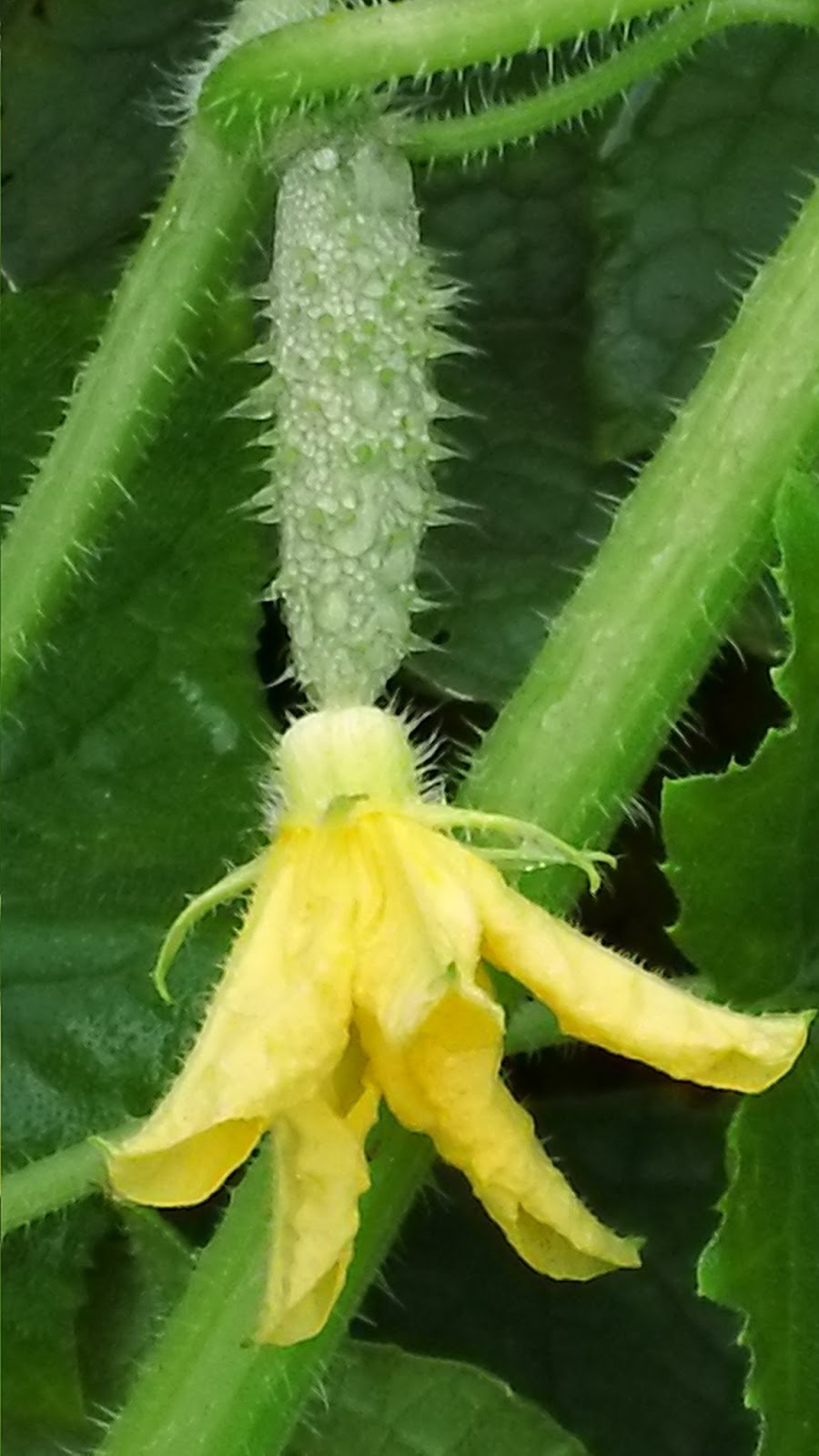
  • Get out of here baby cuke! This is about watermelon! Oh well, you're cute. And pokey. 
  • you definitly can.
    it just isnt as good for your body.
    it pushes your digestive to work harder to digest them if you have to many.
    they are chewy and not to apitizing.
    they really wont grow a watermellon in your belly.
    so you can eat them,
    its just a all around better choice not to!

    Source(s):

    my brain!
    0% 0 Votes
  • you can. however, it may not be very comfortable because it will cause you to grow a watermelon in your belly. no one wants that. your best bet is to spit them out... unless you like to live dangerously...

I haven't decided if I want to live dangerously or not.

I better decide soon though because the melons are taking over!

Our 1st Succession. The Second Succession you can kind of see right next to it. 


Well, that's all for now all you wonderful growers and plant appreciators. 

Tuesday, July 17, 2012

What's Going On in Abingdon, VA

Heather here

I've been spending a lot of time in our corn patch. I'd say it's been entirely too much time, however I really like touching the shiny purple silks.

Being in the corn patch is decidedly less peaceful when all the beautiful silks are covered in japanese beetles. The beetles were mainly congregating on the corn silks. Munching 'em down to the nubs. I kept knocking them into buckets, and sent out an email on the listserve asking if anyone had heard of a way to stop the beetles. The responses came back with neem oil can help, but really if they are just eating the silks it isn't a huge deal...if adequate time for pollination has occurred. Our Agricultural Education Coordinator says that 5 days is enough time.

When applying neem oil, mineral oil, or BT to prevent worms in the corn, one should wait 5 days after silks are fully developed...this insures that your chemicals will not get in the way of pollination.

Which then lead me to read about how a corn plant reproduces.

Although it may seem elementary, these basic discussions and thinking about plant anatomy can help gardening click in people's heads. One participant asked why the corn needs a tassel or silks or why the Japanese beetles eating that part is a big deal--if all she wants is the actual corn-on-the-cob, why does the plant even bother to create all these other parts? Why does it matter?

very orderly and straight

Bug Bucket. Add dish soap to break surface tension

Look at that bi-color beauty 

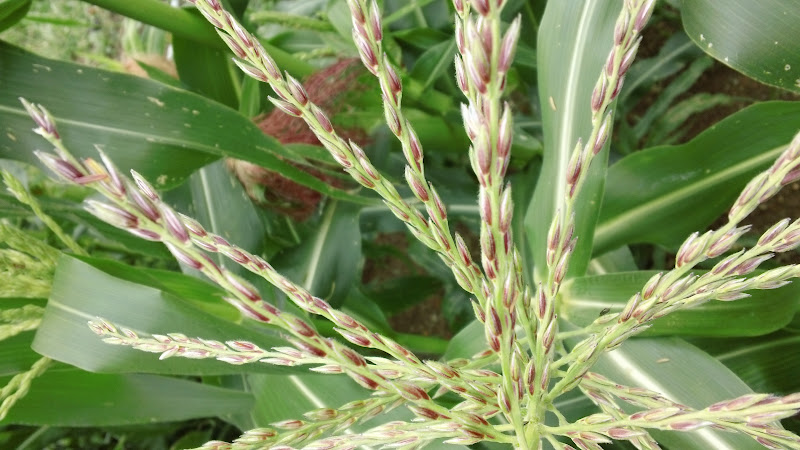
The tassel--branches covered in many little male flowers


Like windmills


Do you see his bee basket? This pollinator is hard at work


Close-up of sunflower row next to corn patch
This lead to a discussion about the various functions each part of the plant performs, and how the plants work with each other, wind, insects, self-pollination, open pollination, and so on. Each tassel is made up of hundreds of tiny male flowers that all contain pollen granuals, falling on the multitude of silks in the field--and each individual kernel of corn has its own silk, all which need to be pollinated .That's a lot of silkage. A lot of pollination needs. No wonder a person should plant at least 4 rows of corn for adequate pollination to occur! Talking about it brought it home to people I think, that plants need their entire structure, and thinking about how the parts work together can get us to be better farmers. No knowledge, no food.

In other news, we had a meeting in which we all sat in a circle and exchanged our ups and downs so far of the season, and what participants thought would be most useful, what they wish they'd done differently, what they would like to see in the future, and so on.

It's the time of year where people are beginning to harvest quite a bit and rotate crops, so we went over tracking your harvest and taking notes and creating a garden map with a crop rotation plan. We were supposed to seed flats of our fall brassicas, but the flats had still not arrived. We hope to seed them this week with volunteers from a local college--Emory and Henry. The school is also letting us use their greenhouse and will water the plants for us.

We planted our last succession of watermelon in the educational template garden (We are trying for 3) and will plant more beans soon. It is crazy how fast the bean beetles go after them.

That's it for now, happy gardening

Friday, July 6, 2012

Each plant contains the moon and the stars ~ Abingdon, VA

Heather here.

There may be an elephant in the garden.
Every time we come out, the peanut plants are freshly nibbled, while all other plants remain unscathed. 
If there is an elephant coming into the garden, he is extremely graceful for nothing has been trampled. It is possible he is sending in rabbit scouts to bring him back tender leaflets and sweet yellow blossoms. Or, there is an outside chance rabbits are coming in as free agents. 

In any event, it seems the peanuts have become a trap crop. 

Rabbits aside, the main scourge upon us at this time is Japanese Beetles. Of all the insects I have come across, I find their personalities the least appealing. As a whole, the population seems pretty dumb. The way they splay their legs out and fall all over the place...geeze beetles. They devoured our corn silks. I believe the silks were around long enough for pollination to still take place, but I don't know for sure. I am currently researching organic methods for controlling them. 

This week we planted a second succession of watermelon. Our first succession is doing wonderful--fuzzy tendrils with lots of blossoms and tiny green globes of possibility. Nora, Jody, and I worked up the bed as a team, adding compost and hilling up mounds. While working we analyzed life in your twenties, rainbow gathering, and the growth cycle of a peanut. I always have scintillating conversations with my garden girls. 

We harvested cucumbers and beans for the first time, and our preparing for our Fall Crops class on July 12th. 


That's it for now!  


Friday, June 29, 2012

Pondering and Wandering in Abingdon, VA

Heather here.

Thursday was a good day for the garden. A good day to be alive, in general.

Yes, there is a heatwave coming. Yes, the plants may have a meltdown. But when you have a crew of volunteers, the sun is out, the garden is vibrant and things are getting done, everything seems suddenly not such a big deal.

Today Denise Peterson, the project coordinator and I, worked with our volunteers. Jody, Taylor, Nora, and Sammie all come out on a regular basis, and it makes all the difference.

We were joined by a new volunteer named Ona, and two ladies from the Americorps VISTA organization came out to take photos, tour the garden, and talk with volunteers and project participants. (For more information about how Americorps helps strengthen not-for-profit projects like these please contact me--hjeffreys@asdevelop.org)

Thursdays are a good day for the media to come out and for us to build awareness of the project while simultaneously taking care of the garden, training volunteers, and helping participants. I let everyone know I will be in the garden every Monday and Thursday, and this is when they can come by with problems, to borrow supplies, receive more plants and seeds, identify pests, or just come talk about their gardens. Two participants came by today--Tony and Lavonda. Lavonda had some questions about cucumber trellising and wanted to know what plants she could plant next as she was finished with her radish plantings, and has an empty garden bed ready and waiting. Tony came by to get some Serenade for his tomatoes, and to shoot the breeze--topics included being so far right you're left and thrip damage on onion plants.

In order to prepare for the heatwave, I watered the garden heavily on Wednesday and Thursday evening, and will do the same again this evening (Friday). After that, the plants will be left to rely on the millions of years of evolving intelligence swirling through their forms.

Volunteer Taylor helps with harvest
Be light, live lighter

Friday, June 22, 2012

The invisible hand of domestication

Heather here, from good ol' Abingdon, VA.

We do these things so our children can have more beautiful days.

I think the thing I am happiest about is the broccoli. It is beautiful broccoli. Seeing this plant's life cycle culminating in this crazy flower-head; this big THING coming up from primordial blue-green waving leaves. I can eat this--this flower is for me.

So many evolutionary paths for a species to go down.Who is leading whom down the garden path?  


Well, I could wax prophetic about the wonders of plant growth forever, but onwards and upwards! 

Thursday found us in the hot seat as far as compost delivery. Rented a bobcat and with the help of volunteers, scooped compost into people's trucks and delivered it to their home gardens. Some participants have trucks but many do not, so we acted as compost deliverers. It started dumping rain at one point and we were just shoveling this wet, heavy stuff, streaked with mud and running around like crazy. We talked about improving your garden with compost and all the different ways you can apply compost. Everyone was really excited to receive it and I'm happy we could support a local composting business-Poplar Manor Enterprises in Floyd County, VA. 
I hung out with participants while waiting for the trucks to come back, and it was a good time to hear more about their gardens and to learn more about them. People helped me harvest in our community hub/food pantry garden, too. 

I went out for all the other deliveries, and it was a great to conduct site visits and deliver compost at the same time. I walked around people's own gardens with them, seeing how every garden varied from the original design. People are doing some really cool things. One participant used to work at a chestnut tree research farm, and used all the old tree tubes to protect her eggplants. She also washes the plants each day with organic insecticidal soap. Her eggplants looked really happy and healthy--hardly any flea beetle damage! 
I was genuinely shocked to see an eggplant without flea beetle holes.

People were really excited to show us their gardens.


I was especially stoked to see these tomatoes as they were scraggly plant orphans randomly dropped off at our  community garden. They are doing so well!
Yum.

Her garden was one of the neatest I've seen. 
She put an "end cap" on each row--tires filled with straw and potatoes. 
Not the best picture but she had beautiful eggplant as well. This one is blooming. The majority of our participants gave up on their eggplant. We did give out row covers so the body count was significantly reduced, at least.


We also gave each participant enough Serenade for a weekly application throughout the growing season. I made a label for each jar: 
SERENADE: Organic Fungicide
Bacillus subtilis
For Fungal Diseases on Tomatoes
You are introducing a living organism into your garden. Serenade contains living bacteria and fungi that compete with
the organisms in the soil that cause fungal diseases.
To build up the population of this blight-preventing mix of creatures, begin with 1/2 cup to 1 gallon water. Using a garden sprayer, apply all over tomato plants. After the first application, apply every 7-10 days for the growing season, using 1/4 cup to 1 gallon water. Wear gloves and eyewear such as sunglasses, and wash hands after using.
Store in a dry, cool area out of reach of children, and DO NOT DRINK

Well, that's it that's all!