Written by Saxon
I was hoping that some of you might begin to imagine something like a root beer float, vegetable style. But, what I'm really talking about is a parade float!
Here at ASPI we're gearing up for the Bittersweet Festival in Mt. Vernon this Saturday. I mentioned before that we're having a sort of "living garden" theme on the float, though the theme has now been extended to showcase a few of the things Grow Appalachia emphasized in the community this season, such as canning, mushroom inoculation, and wild edibles.
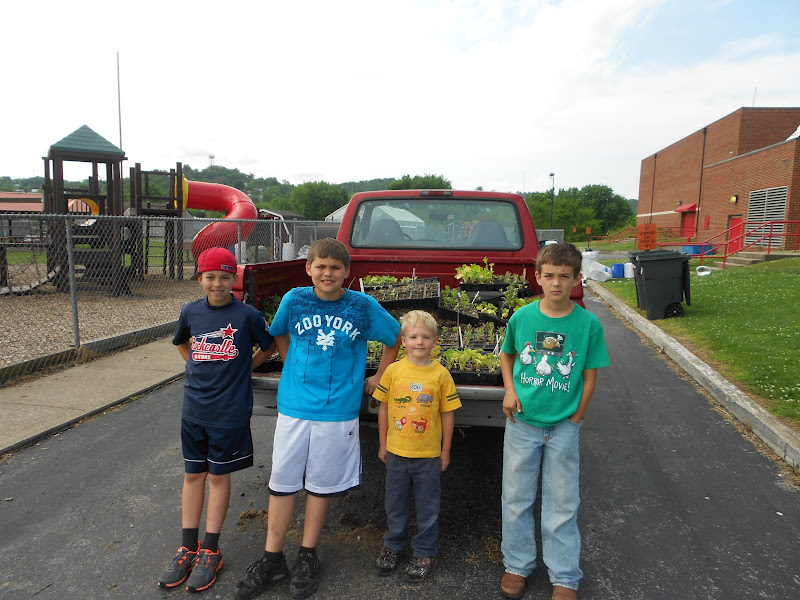
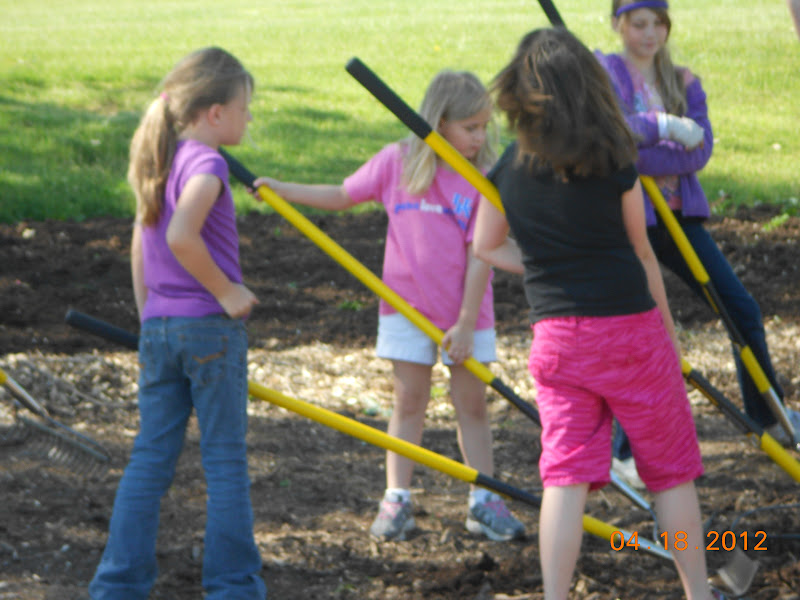
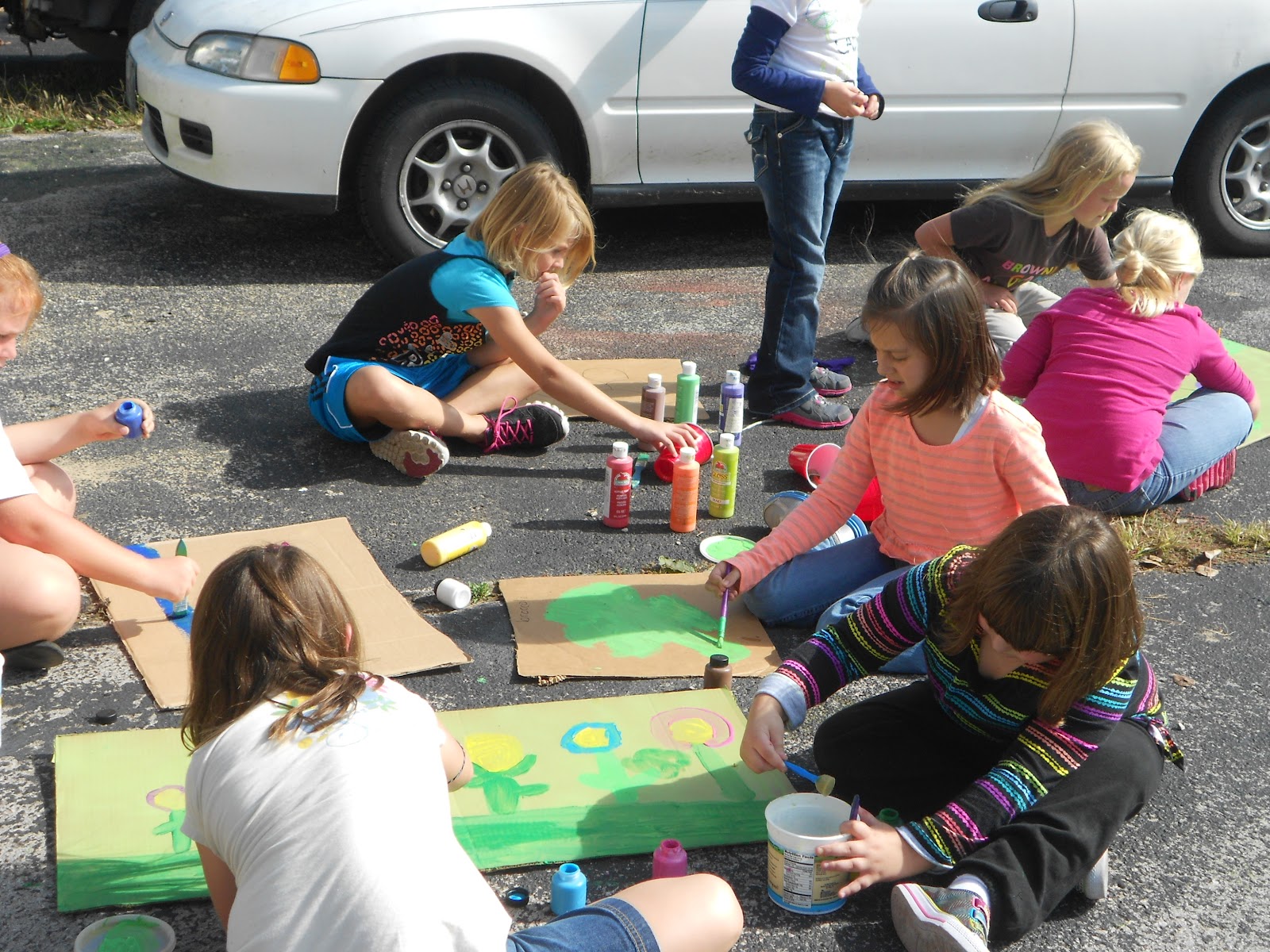
On Tuesday children of participants and the local girl scout troop we've been working with came to help us prepare decorations. The kids chose which vegetable or fruit they wanted to paint, leaving us with about 30 hand-painted beautiful produce paintings, which the kids will hold on the float. They also painted garden-scene murals to go on the edges of the wagon.
While they were here, the kids took full advantage of the last of the
year's ripe tomatoes in our community garden, snacking and even
packing for later.
One of our cherished participants and volunteers, Armilda Barnes, today brought in not only the wagon and haybales to be used in the parade, but a few new and helpful ideas about how to really showcase all that Grow Appalachia does. So, besides the kids with their artful veggies, the float will also feature some of Armilda's delicious canned goods, her produce, and some corn stalks from her crop. We'll have a scarecrow and a few banners explaining who we are and what we do. It's sure to be a good time!
Showing posts with label ASPI. Show all posts
Thursday, October 4, 2012
Thursday, September 27, 2012
Have a Fried Green Tomato in December!
Hello, Saxon here enjoying a cloudy day at the beginning of Fall in Rockcastle County.
This morning I admired 6 jars of green tomatoes, sliced thick and water-bath canned with spring water, lemon juice, and salt, sitting on the counter in our kitchen here at ASPI. These were made a few days ago after we cleared out some plants to make way for fall cabbages.
I really enjoy the occasional side of fried green tomatoes and with all the fruits and vegetables we've produced here this summer I've been trying my hand at canning for the first time in my life in order to keep the bounty from going to waste. Now I've found a way to keep green tomatoes local and ready for frying year round! This is all really thanks to one of are most active participants, Armilda Barnes, who cans anything and everything, down to corncob jelly. She was already canning green tomatoes a month or so ago when we last went to see her, but I haven't had the chance to try it out myself until now, after cleaning out the garden plot some.
To can:
- I had about half a five-gallon bucket-full of green tomatoes and these fit into 6 quart jars.
- They recommend wide-mouth jars, but I already had small-mouth around, so I simply cut the tomatoes in half if they were too large, but most fit without problem. Cut to desired thickness for frying.
- Heat canner water and sterilize jars, lids and rings.
- Heat clean water in a pot, enough to fill six quarts.
- Place green tomato slices in hot quart jar, fill with hot water, add a pinch of salt and a spoonful of lemon juice.
- Now here's where the recipe becomes at your own discretion. When I looked online, most cold-pack methods recommended putting jars in the water bath for up to 45 minutes. Hot-pack methods recommend as low as 5 minutes! This seems like such a huge difference, I was a little nervous about the length of time. Five minutes didn't seem long enough, but since I did do hot-pack I decided to go with a time of 15-20 minutes in the waterbath. This seemed to work fine, though I've not yet gotten a chance to try the tomatoes, the lids sealed ok.
Thursday, September 20, 2012
Updates from ASPI
Written by Saxon
Though she's been here a few months, I would like to officially welcome ASPI's new Executive Director, Suzi Van Etten. With her husband Hal and baby daughter Maddie, Suzi recently moved from New York to work at ASPI. They have roots in this area and are excited to be back! Suzi is excited about the Grow Appalachia program and has many dreams and new ideas to be carried out in the coming years.
It's a busy time here at Appalachia--Science in the Public Interest. Though gardens are slowing down, we met with gardeners on Tuesday to talk about fruit and berry plants and some perennial vegetables which can go in in the Fall and then be of use for years to come! We had a packed house! Rockcastle residents continue to be invested in the idea of gardening to support their families and communities.
Coming up in a few weeks is the Mt. Vernon Bittersweet Festival (October 4th-6th). Our Rockcastle Co. section of Grow Appalachia has been asked to have a float in the parade and to table at the fair. We are having fun coming up with ideas for the float; our hope is to get youngsters from participant families to be a part of a "living garden" that will show off our enthusiasm for the project. We will also be flyering with information about Grow Appalachia and how folks can get involved in the future.
Though our garden here at the ASPI office has tapered off some (not sure if we'll get many more red tomatoes if this cool weather keeps up!) we have put in a few rows of winter-hardy greens and some peas and cabbage. For the other plots in our property, once they are cleaned of summer garden debris, our plan is to put in cover crops to hold soil and nutrients for next year.
Though she's been here a few months, I would like to officially welcome ASPI's new Executive Director, Suzi Van Etten. With her husband Hal and baby daughter Maddie, Suzi recently moved from New York to work at ASPI. They have roots in this area and are excited to be back! Suzi is excited about the Grow Appalachia program and has many dreams and new ideas to be carried out in the coming years.
It's a busy time here at Appalachia--Science in the Public Interest. Though gardens are slowing down, we met with gardeners on Tuesday to talk about fruit and berry plants and some perennial vegetables which can go in in the Fall and then be of use for years to come! We had a packed house! Rockcastle residents continue to be invested in the idea of gardening to support their families and communities.
Coming up in a few weeks is the Mt. Vernon Bittersweet Festival (October 4th-6th). Our Rockcastle Co. section of Grow Appalachia has been asked to have a float in the parade and to table at the fair. We are having fun coming up with ideas for the float; our hope is to get youngsters from participant families to be a part of a "living garden" that will show off our enthusiasm for the project. We will also be flyering with information about Grow Appalachia and how folks can get involved in the future.
Though our garden here at the ASPI office has tapered off some (not sure if we'll get many more red tomatoes if this cool weather keeps up!) we have put in a few rows of winter-hardy greens and some peas and cabbage. For the other plots in our property, once they are cleaned of summer garden debris, our plan is to put in cover crops to hold soil and nutrients for next year.
Tuesday, August 7, 2012
Humbled by Home Visits
Saxon at ASPI
Today Nancy and I visited some of our gardeners. I think today was particularly awe-inspiring. One of our gardeners, Armilda Barnes was busy shucking corn when we drove up. Armilda has a 2 acre plot with beans, tomatoes, squash, cucumbers, sweet corn and hominy corn. She also has a smaller plot on the other side of her house with a variety of fruits and veggies growing. In addition to canning something out of her garden pretty much everyday, Armilda raises three beautiful grandkids that are full of kindness and imagination. On her property she also has an orchard heavy with fruit, hogs, and chickens. She raises and prepares food for an eight person household. She keeps busy and with a joyous, seize-the-day attitude.
I didn't really grow up canning and my mom only had a garden when I was a real little baby. I started getting into gardening, the farmers markets, local food movements when I was a preteen and have always been involved with food culture since that time. I spent 3 years at Berea College working for the Agriculture Department and now I work here at Grow Appalachia. I am grateful and blessed to have learned all that I have over the last several years about soils, harvesting, planting, and more. However, I still feel like there's so much to learn! The knowledge and confidence that Armilda has within her are golden, I really admire her and all her hard work.
Today Nancy and I visited some of our gardeners. I think today was particularly awe-inspiring. One of our gardeners, Armilda Barnes was busy shucking corn when we drove up. Armilda has a 2 acre plot with beans, tomatoes, squash, cucumbers, sweet corn and hominy corn. She also has a smaller plot on the other side of her house with a variety of fruits and veggies growing. In addition to canning something out of her garden pretty much everyday, Armilda raises three beautiful grandkids that are full of kindness and imagination. On her property she also has an orchard heavy with fruit, hogs, and chickens. She raises and prepares food for an eight person household. She keeps busy and with a joyous, seize-the-day attitude.
| Armilda shucking corn |
| Armilda's Helpers |
Thursday, August 2, 2012
Troublesome Weeds
Author: Saxon with ASPI
It makes me sad to see a bountiful, thriving garden swallowed by morning-glories, locust trees!, galinsoga, and what ever else saw fit to grow once the rains came. The battle with the weeds can be so overwhelming that with a busy schedule and the hot weather, it can keep you from getting out there and still enjoying the fruits of your labor. In the last few weeks I have made visits to over half our gardeners in Rockcastle County and many of them are now having what can be depression-inducing weed problems. I have helped a few folks pull out a patch here or there so that they could see their tomatoes, peppers and sweet potatoes and harvest enough for that night's dinner. I talked with one participant, Octavia Sexton, who has now convinced her husband that no-till methods work. He tilled a bed for their tomatoes, which is now full of grass and weeds and has not yet produced a ripe tomato (because tilling tends to churn up dormant weed seeds). In another bed, she chose not to till and to mulch with wood and straw and there she has very little weed troubles and good production. Another participant sprays for weeds and has bare soil, but she's yet to get any fruits from her plants even though they are tall and look healthy. Could it be the spray? It is hard to say, but anything that kills a weed could also harm your plants in little and in big ways.
There are plenty of ways to deal with weeds, but perhaps the best method I've seen is heavy mulch around your plants and the ability to check on the weed-status of the garden every few days. Then you're able to keep many weeds down and keep up with the few that pop out. You also get the reward of having a much easier time harvesting and the pride in a productive, easy-to-maintain garden.
Worse comes to worse, you can always do a little research on which of those "weeds" are actually good to eat! Lamb's quarters, dock, plantain, purslane, poke, and more are edible weeds that are very nutritious and pretty easy to find. That will be the subject of ASPI's next Grow Appalachia workshop, educating participants on wild edibles and preparing a few of them in tasty, conventional recipes.
It makes me sad to see a bountiful, thriving garden swallowed by morning-glories, locust trees!, galinsoga, and what ever else saw fit to grow once the rains came. The battle with the weeds can be so overwhelming that with a busy schedule and the hot weather, it can keep you from getting out there and still enjoying the fruits of your labor. In the last few weeks I have made visits to over half our gardeners in Rockcastle County and many of them are now having what can be depression-inducing weed problems. I have helped a few folks pull out a patch here or there so that they could see their tomatoes, peppers and sweet potatoes and harvest enough for that night's dinner. I talked with one participant, Octavia Sexton, who has now convinced her husband that no-till methods work. He tilled a bed for their tomatoes, which is now full of grass and weeds and has not yet produced a ripe tomato (because tilling tends to churn up dormant weed seeds). In another bed, she chose not to till and to mulch with wood and straw and there she has very little weed troubles and good production. Another participant sprays for weeds and has bare soil, but she's yet to get any fruits from her plants even though they are tall and look healthy. Could it be the spray? It is hard to say, but anything that kills a weed could also harm your plants in little and in big ways.
There are plenty of ways to deal with weeds, but perhaps the best method I've seen is heavy mulch around your plants and the ability to check on the weed-status of the garden every few days. Then you're able to keep many weeds down and keep up with the few that pop out. You also get the reward of having a much easier time harvesting and the pride in a productive, easy-to-maintain garden.
Worse comes to worse, you can always do a little research on which of those "weeds" are actually good to eat! Lamb's quarters, dock, plantain, purslane, poke, and more are edible weeds that are very nutritious and pretty easy to find. That will be the subject of ASPI's next Grow Appalachia workshop, educating participants on wild edibles and preparing a few of them in tasty, conventional recipes.
Tuesday, July 17, 2012
Great Growing
Author: Saxon Brown
I've been busy in Berea and have been away from the ASPI garden most of the past two weeks, which is also the period in which it RAINED! Which means that on my return today to the ASPI office, there was a pound of okra to harvest, 12 pounds of potatoes, handfuls of beans, a pound of turnips, several ripe tomatoes and scores more on their way, a bush of lamb's quarters, 4 cucumbers and 2 heads of cabbage. It's our biggest harvest yet in one day and considering that our garden started out late and looked puny for a long while after, we feel pretty good here in Mt. Vernon! We also have some 10 ft tall sunflowers for the enjoyment of bug, bird and person passing by.
On the 3rd of July, Nancy and I had the pleasure of visiting the home and garden of Hank Gevenon, a very friendly and zany Mt. Vernon resident. His garden is not to its fullest this year because Hank's work has taken much of his time this summer and without rain, its taken an especially hard hit. Lucky for him, his cover crop of wheat is just enough to make some brew and he'll be getting sweet potatoes and potatoes with this improved weather. In spite of his garden, Hank's ability to think creatively and work hard is reflected all over his property. The man is a true inventor. He has built geodesic domes to house a blacksmithing forge and a swimming pool so that he and his wife may use them year round. He showed us several of his life-saving inventions while we were visiting, including a body-cooling device and a portable eye-wash. Hank also was gracious enough to serve us a delicious meal of venison during our visit! He is a great asset to the Grow Appalachia program and hopefully in coming years we will be able to harness some of his brain power, if need be and if he is not so busy with work!
Later that afternoon we also visited the home of Frances Gabbard and her family. Their garden is amazing! Frances says all the praise is owed to her husband, who each evening fills 55 gallon drums with water from the nearby creek and hauls it to the plants--as many times as it takes to get them good and soaked. They had corn, beans, tomatoes, squashes, watermelons and cucumbers. On the edge of their garden grew a line of grapes. They also had blueberries and vegetable plants mixed in with the landscaping around their porch. Frances said she couldn't keep up with the squash, giving Nancy and I each a fresh zucchini and telling us that she sometimes handed them out at church! Besides having a great garden, she had 3 smiling grandkids show up at her door as were leaving, excited to see their granny.
Our last stop of the day was to Matt Wegner's farm by Anglin Falls. Matt's work is impressive. He has terraced gardens on a hillside growing everything from greens to strawberries to squash, a hoop house in the works, hundreds of inoculated mushroom logs, and pawpaw plantings. Matt is not just a home-gardener, he told us he sells mostly mushrooms to restaurants in lexington and the hoop house would allow him to sell transplants and get an earlier start in coming years. Matt's demeanor is a very calming one, he is humble about his work, but his diligence and care shows all around him.
Tonight is our workshop on Fall plantings, we'll be distributing Fall seeds and talking with participants about the "how's and what's" of growing food in cooler weather (it's hard to imagine, I know, but we hope it comes eventually!).
I've been busy in Berea and have been away from the ASPI garden most of the past two weeks, which is also the period in which it RAINED! Which means that on my return today to the ASPI office, there was a pound of okra to harvest, 12 pounds of potatoes, handfuls of beans, a pound of turnips, several ripe tomatoes and scores more on their way, a bush of lamb's quarters, 4 cucumbers and 2 heads of cabbage. It's our biggest harvest yet in one day and considering that our garden started out late and looked puny for a long while after, we feel pretty good here in Mt. Vernon! We also have some 10 ft tall sunflowers for the enjoyment of bug, bird and person passing by.
| Hank pondering his plants |
| Frances and Nancy in the Gabbard's gorgeous garden |
| Matt with his terracing and hoop house structure |
| Just a few of Matt's many mushroom logs |
Thursday, June 28, 2012
Some Great Home Visits
Author: Saxon Brown
| Jonny checking the chickens |
| Robert tilling |
We also stopped by April Johnson's garden. She's had some trouble due to construction on the road which is right next to her garden, they've plowed up several rows of her plot doing their work! April is a very laid-back young woman, she is excited about her garden and not phased by her wiley young puppy running through it as she was talking with us. Her beans are laden down with pods, her onions are a nice mid-size and her sunflowers are on their way to blossoming. If she wants it, she'll have some canning to do!
Our last stop of the day was to Tress Spencer's home near Berea. Tress had just finished slaughtering 12 chickens that morning, she has more layers in the back, and a couple goats doing some of her mowing for her. Her garden's gotten away from her bit, due to some long trips and her avid desire to keep the soil covered. "I can't stand bare dirt," she told us. Tress has many different small square or round plots with peas, tomatoes, potatoes, squash, and some interesting purple-green asian lettuce from greens-guru David Kennedy.
It's always interesting to see the many different methods and ideas unique to each gardener or family of gardeners.
Shall I chime in on the prayers for rain?
Wednesday, June 27, 2012
Okay, folks... I'm putting these photos here in spite of how they look. Can anyone tell me why this is happening? In the past they loaded just fine. I'm not doing anything different, same camera, same computer, but different results. HELP!!!
Last week’s mushroom workshop here at ASPI was a huge
hit! We had about 40 people cutting,
drilling inoculating, and waxing logs.
Those logs went through a major beautification process. Well, they’ll sure be beautiful when the
golden oysters and shiitakes start coming in.
A bit late in the season for ideal starting on the process, but if folks
keep the logs moist and shaded all should be fine. Thanks, Timi Reedy! She volunteered her time to spend the evening
teaching us the ins and outs of mushroom growing, bringing her own equipment as
well. Participants Talt Hall and J.R.
Kimsey, and volunteer Al DeChambeau cut and hauled the logs for us, donating
not only their time and labor, but the logs themselves. A fun time was had by all.
We are seeing some very dry gardens on our site visits,
though most participants are harvesting at least the beginnings of crops on a
pretty regular schedule now. One of our
community garden members, Tina Judd, has harvested nearly 50 cucumbers just in
the last week! The community garden is
looking beautiful – folks are taking good care of it.
Participant Armilda Barnes – you’ve seen me mention her
before! – has offered to start fall crops for us. We’ve gotten the seed and she is hoping to do
some planting soon, though waiting until this 100 degree stuff is past. Next month’s workshop will be about extending
the growing season, so we anticipate folks will be interested in those
plants!
A local greenhouse, Dogwood Crafts and Gifts, has donated
end-of-season garden plants to us. We
are making these available for participants to fill in those holes in their
plantings or to get a later crop.
Keep your fingers crossed that we get some rain soon!
Tuesday, June 19, 2012
Radish Salsa, Wild Greens, and Fishy Flowers
Author: Saxon Brown, Grow Appalachia Assistant at Appalachia-Science in the Public Interest
Today is a workshop day here at ASPI! In just a few hours, Timi Reedy will be teaching locals about the benefits and how-to of homegrown mushrooms and each participant will take home 2 inoculated logs! Much thanks to the families that have located, cut and delivered our fresh poplar and oak logs for this workshop. We'll let you know how it goes later on in the week!
We've been harvesting here and there in our garden plot. So far we've gotten 1 tomato, about 4 lbs of radishes (with tops on), 2 pounds of the wild edible "lambs quarters", and some basil. When first picked, the radishes were so spicy they were almost painful to eat! The spiciness made me think of salsa, so I plopped about a pound of radishes, 2 tomatoes, cilantro, lime juice and salt in my food processor (just so that the radish was chopped, not totally pureed) and it made a pretty good little salsa. It's definitely beautiful, since the radishes were purple and red and white. And over a few days the spiciness subsided, so next time I'd probably add in some onion to give it a little "bite". I've been cooking the lambs' quarters just like spinach, boiled in just a little water with soy sauce and vinegar. I think I like it better than most cultivated greens!
![]() | ||||||
| Lamb's Quarters or Goosefoot: A common "weed", a delicious green. |
Monday, June 11, 2012
Rockcastle County
| The sandbox beans |
The next awesome occurrence(s) were several home visits on Thursday. Nancy and I stopped off and talked to 6 different participants that day, all with different set-ups and styles of gardening. Most everybody that had a large garden had what you'd expect: corn, squash, beans, potatoes.... The first woman we visited had cabbages probably 1 foot across! Which for me, a fairly novice gardener, seems gigantic, but she told us her aunt grew a 16 pounder once! Next we visited Charlotte, a retired school teacher, who besides serving a great glass of tea, has a great big vegetable garden and quite the flower garden bordering her property. Our next stop was to a family with 3 boys, all hard at work planting another garden when we came to visit. This family had beans taller than any I've seen yet and they were beginning to bloom.
After visiting those folks in the county, Nancy and I returned to Mount Vernon and visited a few ladies that live in town. One has such poor soil, probably due to an old mine site up the hill from her property, that she has to do all her growing in pots. Her mantra? "I need all the pots and topsoil I can get!" The next home visit was to Mary's house on the edge of town, a home with a great view of the setting sun. Mary has a few tomatoes in, which she says, "Look just like heaven!" Our last visit was to a home east of town, with lots of little garden plots around the property. This participant is enthusiastic to learn about organic methods. My favorite part of her set up? Her grandkids planted beans in their sandbox and they were actually thriving! The wonders of home visits!
Thursday, May 31, 2012
Our work here in Rockcastle county continues at a fevered pace. Today we are working hard to complete the layout and planting of our Three Sisters corn "maize" for the youth to enjoy at our Richmond street location. We have some Cherokee White Eagle Heirloom corn seed provided by Chestnut Ridge farm.
At our ASPI location we are ordering more soil tests to identify the cause of some yellowing in some of the plants. Things are growing great (even the weeds).
Working with the local Girl Scouts and community members has been a joy. There is such a wealth of agricultural history in the Appalachian region and it is a gift to be able to share in it with the members of this community.
At our ASPI location we are ordering more soil tests to identify the cause of some yellowing in some of the plants. Things are growing great (even the weeds).
Working with the local Girl Scouts and community members has been a joy. There is such a wealth of agricultural history in the Appalachian region and it is a gift to be able to share in it with the members of this community.
Friday, May 25, 2012
| David viewing Talt's potatoes |
| Armilda and David at her site |
| Talt explaining his garden |
ASPI had an interesting visit from David this week. We had an opportunity to introduce him to
some of our Grow Appalachia participants while visiting home gardens. We visited 4 gardens, each of which was very different
from the others.
Talt and Benda’s garden was a beauty. Talt has gardened for many years, and it
shows in his garden. His potatoes looked
ready to begin harvesting! He and Benda
also keep chickens, goats, rabbits, a hog and cows, providing them with all of
the meat and much of everything else they eat through the year. In addition to the site at their home he
works with others on 2 additional sites.
Talt also volunteers weekly with a senior group assisting with whatever
needs they may have. He and Benda live
in a beautiful home that Talt built, along with building homes for each of his
3 sons. Lots of energy going on
there!
Our 2nd site was to Armilda’s farm. She and her husband still grow 4 acres of
tobacco each year, but had lost all their saved garden seed this spring. Grow Appalachia was a ‘life-saver’ for them
as they grow much of what they eat (and are raising their grandchildren as
well) on a very low income. Armilda is
generous to a fault and shares what she grows with others. She also grew on many of our plant starts for
us this year – and they were beautiful!
Last year she put up 964 quarts of food!!! She has gardened all her life, starting as a
child of 8 when she cared for her younger siblings and had to do most of the
gardening, cooking and household work for the entire family.
Next we visited Mary Jo and her husband Josh who have a very
small spot behind their house. Her
plants looked great! Her tomatoes are
already over knee tall and lush dark green.
She is a relative new-comer to gardening and Josh, who gives her full
credit for the garden – saying that mowing the grass is his contribution, told
us the garden looks much improved this year from past gardens. MaryJo says’ “The program’s really helped
me.” MaryJo is also the leader of the
Girl Scout troop that is so actively involved with the project.
Our final site visit of the day was perhaps the garden that
needs the most help. JR has had some
health problems and not spent much time in the garden. It shows!
The site itself is a difficult one, being recently removed from pasture
with all its attending weed problems and quite a distance from his house so
that tending it is more of a chore. His
plants looked a bit puny, maybe frightened by the overwhelming weeds and
unimproved soil. JR and his family are
very much the kind of people Grow Appalachia hopes to help. We will work closely with him and hope to
help him help himself with his needs. He
would like to become self-sufficient and even to raise vegetables, apples and
chickens (for eggs) to sell at market.
He has a long way to go, but is eager to learn!
We are looking forward to working with these folks, as well
as the other participants. What a great
bunch we seem to have involved in the project!
Monday, May 21, 2012
“Don’t it always seem to go, that you don’t know what you’ve
got til its gone? Paved paradise, put up
a parking lot…”
At ASPI we’re doing just the opposite! We’ve gotten rid of part of the parking lot
and put in a small piece of edible paradise right next to the office. The garden plot holds spaces for 6-8
gardeners, one of them being the local girl scout troop, another being the ASPI
office itself, the rest are cared for by local individuals. Before I came on the scene, the walkways were
marked out with mulch and the beds with aged manure compost. My first day of work Nancy asked me to design
and plant the garden; she had many transplants and seeds to go in.
Have
you worked with intercropping and intensive gardening? Well, up to that point, I had never
intentionally done either of these, but one of ASPI’s goals as part of Grow
Appalachia is to encourage folks to use these two methods. If you’d like a little more information, this
page gives a good overview: https://sites.google.com/a/psu.edu/community-garden/intercropping-and-companion-planting
and many books and other internet sites contain more detailed information about
how to intercrop and intensively plant.
Needless to say, I had a little trouble and was a little nervous about
these methods! Having been trained in
sustainable but moderately conventional ways of planting at Berea College, this
method did not come naturally. However,
once I got over the initial shock of putting plants closer than I thought and
intermingling different types of vegetables: roots seeds with tomato
transplants, onions bulbs with cole crops, beans with potatoes…it began to make
sense and it was fun to experiment with different combinations. Within the garden we will also have a display
of the Native American method “Three Sisters” planting of corn, beans and
squash together, so that the squash shades the roots and the beans have the
corn to climb, the corn benefits from the nitrogen fixing of the beans! Next to that is the native edibles bed, which
contains nettles, lambs quarters, amaranth and more! This bed will help folks identify some
“weeds” that are edible and high in nutrients…don’t throw them out, use those
weeds! Edging our vegetable beds will be
a strip of beneficials-attracting flowers, some native flowers, herbs and giant
sunflowers!
At the
end of the day, I had a garden intensively planted and intercropped. To help us all remember what was planted
where, Nancy asked me to make a map of the garden. Using graphing paper and a pencil, I
sketched out each bed and recorded what was planted in it. If you’ve never done this before (I had not)
it’s a great idea. Mapping out your
garden not only helps you remember what you’ve planted when everything finally
starts coming up, but it will also allow you to keep records and encourage a
little note taking for reminders in future plantings.
When I
returned to ASPI for my second week of work, a few of the seedlings had popped
out of the ground, but many of them were still taking their sweet time to
emerge and grow. I am excited to see
what else has come up when I return this week!
Tired of all the parking lots?
Come by and see our little plot of paradise at Appalachia-Science in the
Public Interest on Lair Street in Mount Vernon.
Thursday, May 17, 2012
ASPI Grow Appalachia held the ground breaking ceremony and
work day for the future Richmond Street Community Garden this week. David came down for a visit to see the action
and meet the cast of characters. City of
Mt. Vernon Mayor Bryant was on hand along with a dedicated bunch from the
community who came out to help get the project up and going. Those volunteering included: Healthy Communities Committee members, a
representative (Holly Hopkins) of the development association that owns the
property and a number of local citizens, including school superintendent Larry
Hammonds, as well as our enthusiastic Girl Scout Troop. Mark Davis of PRIDE was on hand to assist the
Girl Scouts in making rain barrels. The
girls had a great time painting barrels, as well as doing some planting in the
newly installed raised beds. The local
paper (Mt. Vernon Signal) sent a photographer to cover the event with promises
of an article in next week’s paper. The
community has taken a great interest in the project and plans are to develop
the site to include an educational aspect as well as putting in some benches,
maybe a pavilion, etc. and turning the site into a local gathering place as
well as encouraging folks to take on a garden plot. The local (and, at this point, struggling)
Farmer’s Market adjoins the garden space and we hope to see a
partnership/collaboration of the two groups that will benefit the
citizenry.
Other news includes our May workshop on Home Food Processing
that was given by our Extension specialist, Hazel Jackson to a group of 24
attendees. It was a successful program
with much input from the attendees, making it a fun experience for all. Everyone went home with a small basket of
supplies and a great deal of information.
Thursday, May 10, 2012
The big news from Rockcastle County this week is the plant
give-away.
We picked up the plant starts
(mostly flowers) that the Mount Vernon Elementary School 4th graders
grew in their PRIDE greenhouse for our Grow Appalachia project and purchased
more plants from the Rockcastle County High School FFA students. Also available were the plants (the best of
the bunch!) that were grown for us by one of our project participants, Armilda
Barnes, who delivered over a thousand starts.
We had a total of about 70 flats of starter plants to share with
participants. The evening of the
give-away, the parking lot was over-flowing with participant cars. Nearly everyone showed up to take home plants
for their gardens. We are working with
39 families and a Girl Scout troop (7 girls and their families). Those with community garden plots headed
right into the garden and planted their plants the same evening.
Also, this week, our summer youth employee, Saxon Brown,
came on-board, putting in her first day of work with us. We had her start out with work on the ASPI
demonstration plot. She planted up a
storm and our garden plot is looking good.
Saxon has been an ag student at Berea College, and her knowledge of
gardening will be a great benefit to the project this summer.
Mark Davis of PRIDE has agreed to attend our community garden work day
on the 16th to assist the Girl Scouts in turning our plastic barrels
into ready-to-use rainbarrels. The
Richmond St. site is being 'groomed' to be taken over by the local
community. Grow Appalachia's part will be getting the project started
this first year, then assisting as consultants if needed in the future. We hope to see numerous small sites grow up in the coming
years with the support of the community.
![]() |
| Sign for the Richmond St. Community Garden |
| the ASPI Community Garden site |
| Proud 4th graders (and assistant) with their plant donation |
The June workshop has been confirmed. Timi Reedy, a local mushroom ‘guru’ will do a
hands-on training of mushroom log inoculation, with each participant
inoculating and taking home their own logs.
Grow
Appalachia will be attending Mt. Vernon’s ‘Longest Day of Play’ on June 20th. This event has become a popular healthy
living event in the county and is well attended each year.
Keeping busy in Rockcastle County!
Friday, May 4, 2012
Greetings from Rockcastle County!
ASPI received a visit from folks from Uplands
Village in Pleasant Hill, TN. Gail Ford
and Jerry Ziegele came up to consult with us about their plans for building a
more sustainable community at Uplands.
They were familiar with the many years of this kind of work that ASPI
has been doing in Appalachia and wanted to get some first-hand information as
well as see our demonstration center. A
big part of what the ladies were interested in talking about was food
production. They were impressed with the
work that Grow Appalachia is doing and hope to be able to do something similar
at their site. They already are doing
some gardening, but would like to expand their production to include most of
the fruits and vegetables used at Uplands (a community of 300 retirees). This project is still in the early stages and
will, of necessity, be a long-term process.
Uplands is a retirement community with elders of varying abilities who
are never-the-less very interested in growing their own organic food.
Nancy attended the Upper Cumberland Watershed Watch water
quality training and has been re-certified for stream testing and will be out
in the creeks this summer!
Mike has set a definite date for our ground-breaking work
day of the Richmond St. community garden site.
Local Girl Scouts, the Mayor and numerous local citizens are expected to
be there on Wed. the 15th to build raised beds, install a sign, and
do a bit of planting. The Girl Scouts
will be painting rain-barrels as well.
The newspaper has committed to covering the event.
The gardens at the ASPI site are beginning to look like
something now, and home gardeners are reporting the beginnings of growth in
their gardens. Spring has definitely
sprung! Or is that summer? What do you think of this weather?
Thursday, April 26, 2012
Hello, from Rockcastle Co. and ASPI!
Lots of news this time around.
We held a workshop on chemical free insect and disease
control and on composting – why it’s a good thing, and how to do it - on April
17th. We had over 25 participants present
at the workshop to learn about these subjects.
Nancy Seaberg presented the insect and disease control part of the
workshop and the composting part of the workshop was facilitated by one of our
most active project participants, Mike Lewis.
This guy has also single-handedly taken on the coordination of our
second community garden site. Mike is a
young disabled veteran who is a partner farmer in a local CSA and has become a
huge benefit to the project. He is one
of our two new hires, the other being a Berea College student. These two will handle most of the community
garden organizing at the Richmond St. site, as well as being introduced to the
home gardener end of things.
Rockcastle County High
School FFA students came out and spread our first layer of compost and laid out
the main pathways on the ASPI community garden and a group of 2nd
and 3rd grade Girl Scouts came out to spread ‘poo’ (manure compost).
The Girl Scouts have also decided to
take on a plot for themselves and have been back to begin planting.
We have confirmed the schedule (May 15th) for our
Extension specialist to give a hand-on workshop on Home Food Preservation. This workshop will be held at the Extension
office here in Mt. Vernon. Mike is
making plans for a workday on the Richmond St. site that will include local
businesses, the Mayor, hospital personnel, and the Girl Scouts – who will be
painting rain barrels that day. With
luck we will be getting coverage by a couple of Newspapers for that one! Nancy attended Earth Day events in Garrard
Co. and in Somerset (by request) with Grow Appalachia displays to help spread
the word about the project.
Thursday, March 29, 2012
Welcome from GA ASPI
Well, we're on our way here in Rockcastle Co. The local community has welcomed us and is showing support to our endeavors. The Healthy Communities group has contributed $2,400.00 to a community garden site. This site needs major work and will be a secondary site this year as work progresses on soil building, putting in raised beds, and installing a demonstration garden on a small portion of the site. The site adjoins our Farmer's Market site and will be an attractive addition to the local landscape. The high school FFA is building a tool storage shed to go on site with much of the lumber donated by Cummins Lumber - a local lumberyard. The shed roof will be set up for rain water catchment using barrels purchased through our PRIDE coordinator. One of the garden benches we received will go to this site while the other will stay at the second community garden site at the ASPI office & demonstration center. The ASPI site will be our primary community garden site this first year. It seems the community garden idea is not as popular as home gardens in this rural area, though with the interest of the Mayor and several other local agencies we hope that a year of demonstration will make this a popular idea.
We have reached our full participant capacity and are daily turning away folks who would like to join up. The early full sign up is thanks in part to the attention we have received in the local paper - The Mt. Vernon Signal - and the fact that the local schools sent home Grow Appalachia announcements with students. At this time we are preparing to set up a waiting list in the event any openings appear and for 2013 additions.
We have had good attendance at our first two workshops. The first workshop speaker was a local market gardener who talked about her no-till, intensive, organic farming practices. Our local CES ag agent spoke at our second workshop along with a local wildcrafter. Lots of question and audience participation at both.
Home visits are just beginning to get underway. More on that next time.
Friday, February 24, 2012
Grow Appalachia Site Coordinators Meeting 2012
For all of you Grow Appalachia coordinators this blog post will be old news but we thought it would be nice for all our participants and other blog readers if we recapped the site coordinators meeting that we had in Berea this week. David Cooke was gracious enough to heed all our requests to have a get together of all the site coordinators, and this past Tuesday and Wednesday we did just that. It was really great to put faces with names and get to meet all the coordinators and hear what each site has in mind for the upcoming season. This year there will be 15 sites representing 4 states; Kentucky, Virginia, West Virginia, and Tennessee, participating in Grow Appalachia. These include Red Bird Mission, Henderson Settlement, Pine Mountain Settlement School, Laurel County African American Heritage Center, Lincoln Memorial University, St. Vincent Mission, High Rocks for Girls, Appalachia-Science in the Public Interest, Appalachian Sustainable Development, Bluegrass Domestic Violence Program, Cowan Creek Community Center, Mujeres Unidas (KY River Foothills Development Council), Project Worth, Step by Step, and Scott Christian Care Center. Representatives from each of these sites were present at the meeting and we were all able to get to know one another and learn about what Grow Appalachia at each site looks like.
We had the opportunity to learn all about high tunnels, what they can be used for, how they can be constructed on a budget, and some growing techniques that are necessary when growing in high tunnels. This Information may be very useful in the future for many of the Grow Appalachia sites, as we look at ways to grow more and to start our own plants for our participants. We also had the wonderful opportunity to hear from Janet Meyer, Berea College’s greenhouse and farm manager. Berea has a certified organic farm that produces much of the food that is used on campus and Janet was able to provide us with wonderful information about organic growing practices and practical tips for our gardening programs.
Several additional topics that we discussed were budgeting, tool choices, ordering seed, various marketing and distribution plans, and the possibility of new directions for the program. We also discussed the goals of grow Appalachia which are based on the following mission statement:
o Grow Appalachia is dedicated to helping mountain families plant a healthy future for themselves and their communities by:
· Providing them with skills and resources to grow sustainable, nutritious food.
· Teaching them how to prepare and preserve food in a healthy way.
· Empowering them to share their knowledge in the community.
· Creating programs to provide food to elderly and disabled residents in need.
Through these smaller steps, we as Grow Appalachia Coordinators hope to inspire long term independence such that gardeners and small farmers in Appalachia are able to provide food for themselves and their families and even support their families through the marketing of their produce.
I feel that this year’s group of coordinators is highly knowledgeable and quite inspiring; I’m looking forward to a great year collaborating with all of you and figuring out just how this program is going to make an impact and hopefully change food systems and lives in Appalachia.
Labels:
ASD,
ASPI,
BDVP,
Big Ugly,
Cowan Community Center,
Henderson,
High Rocks,
Laurel County,
LMU,
Mujeres Unidas,
Pine Mountain Settlement School,
Project Worth,
Red Bird Mission,
Scott County,
St Vincent Mission
Subscribe to:
Posts (Atom)