Showing posts with label Red Bird Mission. Show all posts

Wednesday, June 27, 2012

Providing Your Plants With Water---Chad Brock ---Red Bird Mission

This week I figured a blog about getting your garden through a dry spell would be beneficial. In our area we haven't seen rain for weeks now and that is making a huge impact on our gardens. All plants need adequate water to survive and do well and with no rain this can be a time consuming and very labor intensive chore. Most vegetable's need 1-2 inches of water per week. This is very important through the hottest months of the growing season. If plants do not get enough water their roots can't grow deep and strong enough to feed the plants with the nutrients they need to grow and produce well. Overhead watering or sprinkling is a good method for watering most leafy vegetables such as lettuce, salad greens, mustard etc. But for other plants such as tomatoes, squash, carrots, and some of the cole crops it is best to water around the base of the plant to help prevent fungus and disease in the leaves. Try and water your plants before 10:00 A.M or after 5:00 P.M.


     Some people are using tap water to spray their gardens, but this can become expensive after a while and for those participants with a well it is unsustainable simply because with no rain the well of course gets low to and can deplete the family's source of water for their home. A few of our participants have been packing or pumping water from a near by stream. Although very labor intensive, this is the most sustainable and practical way (other than a rain barrel) or if a rain rain barrel is unavailable or has been emptied . 

We have suggested using a rain barrel to catch the run off from the roof of their houses. It is important to try and get these set up in the early spring when the rain is more plentiful. A rain barrel can be constructed fairly simply and at a reasonable cost. I have added a link that teaches 3 ways to make a rain barrel for less than $10.
.http://green.thefuntimesguide.com/2007/02/rain_barrel_construction.php .

So until mother nature decides to give us a hand and provide us with some much needed rain try and keep your plants watered with what ever method you have available.


Monday, June 11, 2012

Home Visits ----Red Bird Mission------Chad Brock

     This week some volunteers and I made a few home visits to see how our participants gardens are growing and to offer some help to those who could use a hand. One of the families we assisted were the Fee family.
     We went and joined Ewel and Elizabeth in the garden to hoe their corn and beans. This couple is well known for the vegetables they grow, sell and share. The volunteers were really impressed at the size of their garden seeing as they are both in their eighty's now and still work every day in their garden. When asked how they do it they reply "this is what keeps us a going." This couple has been gardening their entire life and hold a huge amount of knowledge when it comes to self sustained gardening. They grow a lot of heirloom vegetables from seeds that have been in the family for years. 


Hoeing corn  with Ewel Fee


Elizabeth Fee 


Fee garden
Fee garden


     Another participant we visited was Donna Asher. She is pretty new to gardening but has done really good at caring for her plants with the help of her grandson. She is growing a nice variety of vegetables and has already been harvesting some things to share and eat. Unfortunately we have seen sure signs of early blight in her tomato plants and we advised her to pull all the affected leaves off and remove them from her garden and to use the liquid copper spray we gave her.


Donna Asher showing us her garden


Donna's cucumbers 

Donna's tomatoes
Donna's tomatoes


  While we had an extra hand we also staked our tomatoes and used some shredded paper to mulch around them, completed a small fence to try and keep the deer out of our garden and planted some white half runner beans to be grown for seed to distribute to our participants next year. We also plowed a 800 sq.ft area and planted some Miria sweet corn and have begin providing the Red Bird Mission Work Camp Kitchen with lettuce we have grown here on campus .Yep it has been a fun and rewarding week for Grow Appalachia here at Red Bird Mission.  


Volunteer mulching tomatoes
Our proud volunteer's

Volunteer mulching tomatoes 


Our tomatoes, staked and mulched
Planting beans


Tuesday, May 29, 2012

Another Busy Week For Grow Appalachia at Red Bird Mission ----- Chad Brock

Here at Red Bird Mission the Grow Appalachia crew is working on getting stakes and cane poles for all of our participants' tomatoes and beans. This has been a pretty busy week between caring for our Grow Appalachia Gardens; weeding, hoeing, fencing watering plants etc. and gathering our poles and getting our insecticides and fungicides order together.

We are going to make another round of home visits as soon as we have these things ready to distribute to make the most of our visits. I am really anxious to see how the gardens are looking. There are a few I haven't seen since we distributed their plants and that has me curious! I have seen quite a few of the participants who have requested assistance in their gardens and they are doing well. Just have been super busy tending to the gardens here on Red Bird's campus and haven't had the time to get around to all of the gardens.

We received a couple nice tool donations .One from the Columbia U.M.C in Ky. The other was from a volunteer from Lake Geneva, Wisconsin that spent time helping us prepare our raised beds and did a lot of wonderful work on our strawberries. She sent us a nice little Oriental hand tool for shaving weeds and planting as well as a special variety of sweet corn seed by the name of Mirai .This variety of corn is supposed to be the sweetest on earth and hold its sweetness for days. I would like to send a huge thanks to these special people. Donations like these help to impact the program, and shows that these people are really impressed by the service they have seen Grow Appalachia provide to the people in this area.

Tool donated by Volunteer


                                                  Tools donated by the Columbia U.M.C


           Tools donated by the Columbia U.M.C

Tuesday, May 22, 2012

Our Week at Red Bird Mission ---------- Chad Brock

      Yesterday Karen and I finished planting our Grow Appalachia community garden. We now have a nice variety of vegetables growing here on campus and in our participants family gardens. It is awesome to see such enthusiasm from our participants as they look at their garden filled with beautiful plants and looking forward to the great food they will provide to their families. We are beginning to see some harvesting  from some of our earliest plants. Here at Red Bird we have harvested a couple bushel of lettuce, a couple gallon of strawberries and we have peas and onions ready to eat. Some of our participants have already harvested and eaten peas, lettuce, mustard and turnip greens and one family graveled out new potatoes. Some were already the size of a grapefruit.


       We now have to focus on tending to these gardens and to stress the importance of a well kept garden to our participants. Another important step is to see that they have the resources they need such as poles for trellising, and organic sprays to ward off all the plant destroying diseases we have here. Proper care of these gardens will have a huge impact on our yield.  We plan on using our gardens here to demonstrate a few different methods to stake, cage and trellis tomatoes, beans and cucumbers as well; as showing the benefits of using some type of mulch. We will also use the raised beds to compare the growth and yield provided by them along with advantage of having the structure around them making it much easier to add fencing for predator protection and adding cover in the fall to create a small cold frame extending your growing season.
 I am also going to show the effects of pruning tomatoes by pruning  two plants and leaving a couple unpruned  and recording their yield so they can see the difference a little extra attention can make, and also as a learning experience for me seeing as I am new to the pruning of tomatoes.

Friday, May 11, 2012

Final Spring Planting---- Chad Brock--- Red Bird Mission

This week we are making our final push to get these gardens prepared and planted. We had a couple of gardens that we were unable to get plowed with a tractor and had to break the ground with our tillers. This is nearly impossible for your typical tiller but the Grillo will get the job done! We set our depth guide and just took  a couple inches at a time and made several passes increasing our depth each time and were able to work the ground as well as any other equipment made! Thank God for the Grillo.


Karen and I went yesterday and picked up the last of the spring plants for our participants.  We will be distributing them this week now that we feel safe from frost. Our next big chore will be getting adequate trellising for all our participants so they can keep these plants up off the ground. We plan to try to use river cane for this seeing as we have an abundant supply nearby. We plan to use cane poles and bailing string and do a Florida weave method . Our participants are pouring in after their plants and are so excited about getting their final spring planting done.


Wednesday, May 2, 2012

Time fly's when your having fun! Chad Brock Red Bird Mission

We had beautiful weather last week and were able to get a lot of garden planting done. Here at Red Bird Mission we planted several raised beds with cole crops and several different types of seeds with the aid of a couple volunteers. We have cherry tomatoes, beefsteak tomatoes, cucumbers and green bell peppers in our greenhouse that are ready to be transplanted. As soon as we get past this last frost date these will be planted in our Grow Appalachia Gardens.


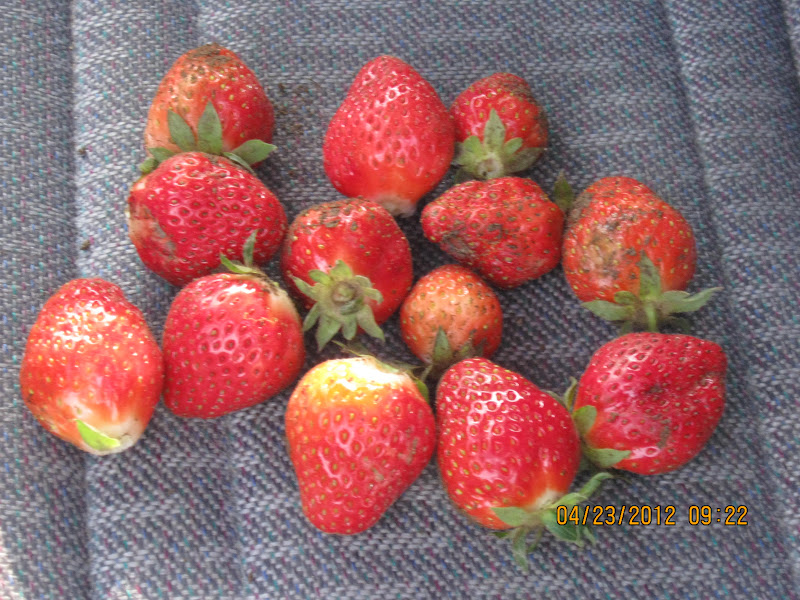
       Our garden here on campus has Sweet corn  and onions up and growing and our lettuce bed is coming right along . We have harvested two pecks of lettuce from our raised beds and our snap peas are looking great. We have also harvested a couple gallon of strawberries and still are getting more each day. Karen and I used some shredded paper to mulch around them and are seeing very positive results, they are staying much cleaner and have hardly any bad spots.


Most of our participants have planted  potatoes, onions, lettuce, mustard, broccoli, cauliflower, Brussels sprouts,and a few other cole crops. A few of them have pushed some tomatoes and peppers out. I told them that was risky business, we could still see some significant frost but this warmer than normal spring has everyone hopping. I suggested they just keep a close eye on frost predictions and if one was coming cover their plants with a sheet ,cardboard box or news paper if they did not have frost covering fabric
  This week we have some more tilling requests and will be adding up our plant needs so we can get them and have them available for our participants next week.


Its hard to believe this is the first of May! March and April went by so fast but you know what they say " Time fly's when your having fun"!


Tuesday, April 24, 2012

Cold Snaps - Red Bird Mission

Just when you are getting all excited about your gardens, WHAM! A FROST.  Then it warms up, you get all excited about how the little veggies are doing and.....BAM! another frost.  It's so easy to forget we just got into spring and most of this year was like an early summer.  Looking ahead to what to do for our plants, IN CASE we get caught flat footed, is simple unless you have a huge garden to protect.  Here are a few pointers from Gardening Know How.

How to Protect Plants From Frost Damage
Posted By Nikki Phipps In Pests & Problems |
By Nikki Phipps
(Author of The Bulb-o-licious Garden [1])

Frost on plantIt’s spring, and you have worked hard putting in all those precious garden plants only to learn that the threat of frost is on its way. What do you do?

Tips For Protecting Plants From Frost

First of all, do not panic. Do keep in mind that anytime there is a threat of frost, you need to take precautionary measures to protect tender plants from exposure to cold temperatures.
The most common way to guard against frost is with the use of some type of covering. Most anything will work, but old blankets, sheets, and even burlap sacks are best. When covering plants, drape them loosely and secure with stakes, rocks, or bricks. The lighter covers can simply be placed directly over the plants, but heavier covers may require some type of support, such as wire, to prevent the plants from becoming crushed under the weight. Covering tender garden plants in the evening will help retain heat and protect them from freezing. However, it is important that the covers be removed once the sun comes out the following morning; otherwise, the plants may fall victim to suffocation.

Another way to protect plants is by watering them a day or two before the frost is expected. Wet soil will hold more heat than soil that is dry. However, do not saturate the plants while the temperatures are extremely low, as this will result in frost heave and ultimately injure the plants.

Light watering in the evening hours, before temperatures drop, will help raise humidity levels and reduce frost damage.

Some people prefer to mulch their garden plants. This is fine for some; however, not all tender plants will tolerate heavy mulching; therefore, these may require covering instead. Popular mulching materials that can be used include straw, pine needles, bark, and loosely piled leaves. Mulch helps to lock in moisture and during cold weather, holds in heat. When using mulch, try to keep the depth at about two to three inches.

Some tender plants actually require over-wintering in a cold frame or indoors. Cold frames can be purchased at most garden centers or built easily at home. Wood, cinder blocks, or bricks can be used for the sides and old storm windows can be implemented as the top. For those needing a quick, temporary frame, simply incorporate the use of baled hay or straw. Stack these around your tender plants and apply an old window to the top.

Designing a garden with raised beds will also help guard plants against frost during cold temperatures. Cold air tends to collect in sunken areas rather than higher mounds. Raised beds also make covering of plants easier.

The best way to know what type of precautionary measure you should take for tender garden plants is knowing their individual needs. The more you know the better off your garden and tender plants will be.

Article printed from Gardening Know How: http://www.gardeningknowhow.com

God Bless and Happy Planting! - Karen Dial

Wednesday, April 18, 2012

Moving Right Along--- Chad Brock--- Red Bird Mission

       This will be another very productive week for Grow Appalachia and Red Bird Mission. We helped the E.C.D Early Childhood Development (2-6 years old) class plan their garden layout and used the mantis tiller to plow up the area, it worked perfect! We provided them with a few cole crop plants we had started in our greenhouse and provided them with a couple different varieties of seeds to plant. They are really interested in seeing these plants and seeds grow into food.

E.C.D Class Garden
E.C.D Class Garden

E.C.D Class Garden

E.C.D Class Garden
E.C.D Class Garden


 We are working toward getting the raised beds filled for the Girl Scout's, DeWall Senior Center and the ones we built for the Grow Appalachia gardens. The beds here on campus will provide produce to be sold to the Red Bird Mission Work Camp and at the Farmers market. We have also added three additional plots here on campus to grow vegetables to be sold and have the benefits added to the Grow Appalachia funds trying to begin being more self - sufficient. Karen and I planted two huge lettuce beds,some onions, and some corn in one of these plots and will plant potatoes in another as soon as the ground drys back up . We also have tomatoes, bell peppers and cucumbers growing in our greenhouse to use as starter plants for these gardens. Growing our own starter plants will help keep cost of these gardens to a minimum.
          
Will we have our Grow Appalachia meeting April 19th at 6:30p.m in the Cramer room her at Queendale. The topics discussed will be raised bed's, Organic gardening and "excess planting" to contribute to the needy and or sell at the farmers market. We will be giving cole crop plants, results from the soil samples taken, and fertilizer to the participants that attend so we are hoping for a good turn out. Anyone interested is welcome to attend so we hope to see you there.


Greenhouse seedlings
Grow Appalachia Garden


Grow Appalachia Garden

Thursday, April 12, 2012

Blessings from Heaven – Red Bird Mission

This week we have several nursing students from University of Tennessee as well as folks from Ohio, volunteering with our project.  Gathering seeds for distribution and visiting gardens is a time-consuming task.  Without volunteers, our small groups can barely cope with getting it all together and done.  With every open heart that comes to serve we, and our participants, are blessed with their enthusiasm and selfless service to others.  Even small tasks, like labeling tools, watering greenhouse plants and swinging a hoe are a joy to them.  When things start to get too time-crunched and you are feeling like there’s not enough time in the day, remember those who have (and do) eagerly work along side of you.  And be blessed.  Enthusiasm is infectious if you let it be.  

Speaking about volunteers.  They don’t only walk on two legs, or four if you use a horse or a dog.  Plants volunteer too.  We found a huge patch of tomato plants – and two totally outnumbered potato plants – in a pile of dirt next to our compost bins.  And I learned something new!  That’s always a good thing, right?  Even though they may have been large tomatoes, they might produce cherries.  Cherry tomatoes that is.  You probably already knew this, but I can’t wait to see what we get. 


Make yourself a “contemplation space” maybe out of your garden.  They don’t only have to bring you food; they can bring you peace as well.
God Bless and Happy Planting! ~ Karen Dial