Wednesday, August 17, 2011

Intern insights - St Vincent Mission - Jessica Lasseter

My time at St. Vincent has been both enjoyable and wholly surprising. I came to this internship expecting simply a job; I come away having the great pleasure of knowing a community. See, I come from a rather large city and have never known the experience of a small town. After some getting used to, my eyes were opened to not only how the staff at St. Vincent cares about each other and the citizens they serve, but how the citizens care about one another. I have had the joy of sitting in the second hand store and hearing siblings and neighbors talk and banter while taking the time to check in on the latest concerns they have. I have had the pleasure of speaking with participants that ask about how this person or that person are doing, truly caring about the answer. Even if I had not had these enjoyable moments, to walk in and see a prayer board with names written in ever hand writing would have been enough to show the love the citizens of this community have for one another. Of course, no community is perfect; however I have met more kind hearts and gentle souls in working through this internship than I have in any other three month span of my twenty-one years.
            My most cherished memories not only come from the second hand store, but the Grow Appalachia gardening program, the original reason I came. The best parts of my summer were going out to see people’s gardens, even when the weather was making the growing hard, seeing the pride on the gardener’s face made my day every time. I took delight in seeing the gardens of children and watching them light up when they talked about what they had done. Home visits were not the only times Grow Appalachia brought joy to the participants, I fondly remember many second hand store mornings when the garden was the topic of discussion, hearing the wisdom of experienced gardeners being passed down so casually was an experience I will not soon forget. However, doing interviews with the gardeners has to have been my favorite part of the entire summer. Hearing the candid and profound answers to the simple questions such as “why do you garden,” has been both humbling and exhilarating. I will openly admit I have called home to share what the interviewees said, almost every evening.
            My time at St. Vincent has been enjoyable, entertaining, educational and memorable. This experience has solidified my desire to become a social worker, while at the same time giving me new perspective for that future career. I would not trade this summer for any other, and I pray that the citizens and staff I have encountered know just how amazing they truly are.        

Tuesday, August 16, 2011

Peaches in the Summertime - Apples in the Fall

Trees are heavy with fruit up here in the Allegheny Highlands as we approach the season of ripening.  Thanks to adequate rainfall last year and no late frost in the spring, we are expecting to harvest a major heap of apples, many of which are heirloom varieties planted three generations back.  From peach preserves and cobbler to apple butter, sauce and pie the fruit is only useful when its gathered, and there is no shortage here.  We haven't planted many fruit trees this year, but have considered taking cuttings from certain heirloom varieties and grafting them onto standard root stock.  This would be an affordable way to grow a larger number of trees at a time and hold on to these rare apple varieties.  We would name this portion of the program "throw apples atch'ya".


 One of our participating garden sites is in Hillsboro, WV at the birthplace of Pulitzer Prize winning author Pearl S. Buck.  High Rocks has found a great opportunity to partner with the museum at the Pearl S. Buck's house through Grow Appalachia to create a community garden space.  The garden has been named after her award winning novel The Good Earth, and is home to an orchard that features over 30 varieties of apple trees.  The Good Earth Garden site hasn't been cultivated in over thirty years, but is extremely fertile and productive.  All the produce grown at this site has been donated to our local food pantry through a program called "Plant A Row for the Hungry".  This garden has also become a great location to host workshops including one titled "Growing a Healthy Garden" where market growers in the community came to share their gardening secrets and wisdom about soil health and pest defense.  Next month the birthplace will host a workshop on seed saving and heirloom gardening.


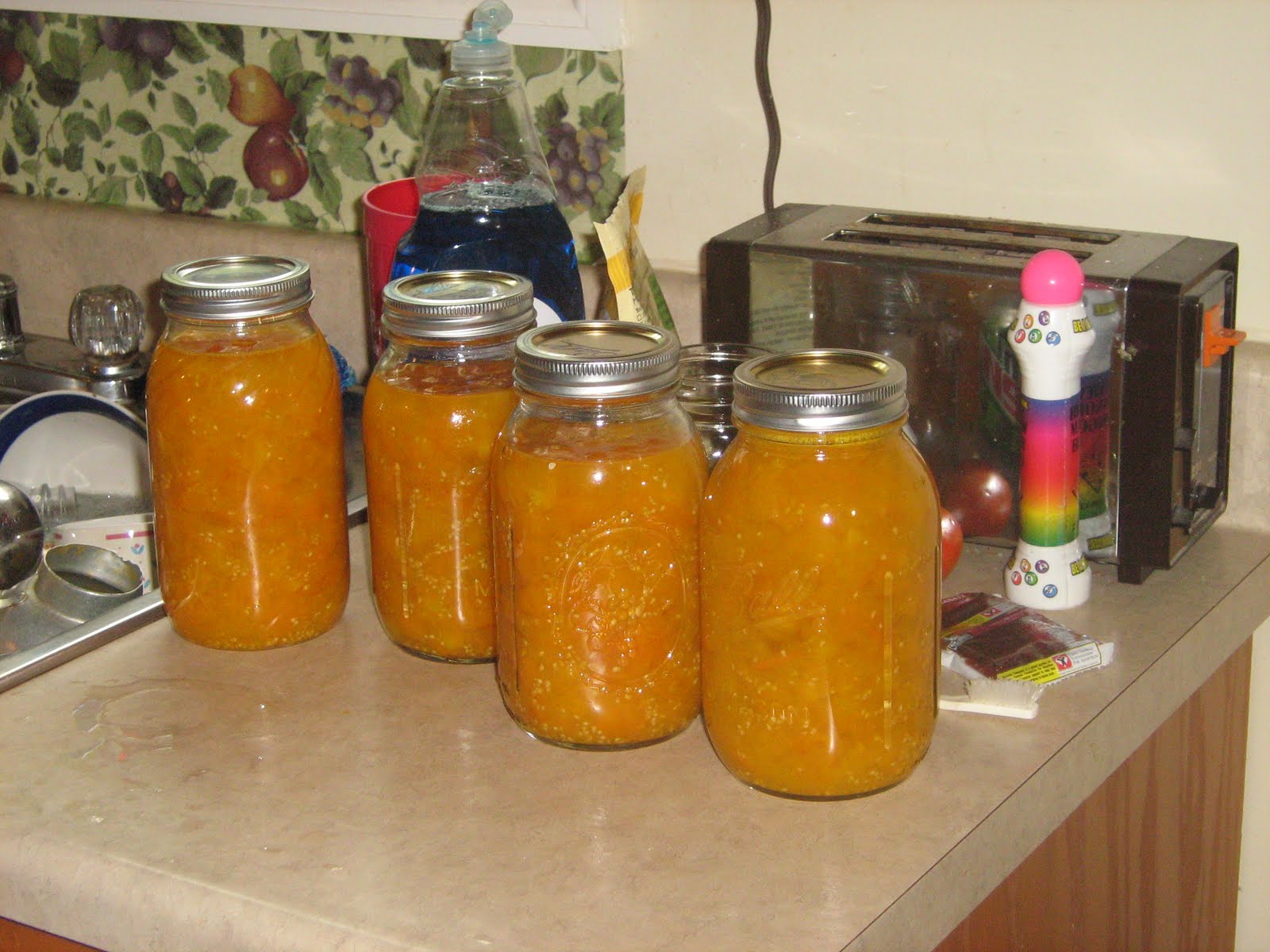
Aside from orchard dreaming, Grow Appalachia participants are making use of this cooler weather to spend time canning the surplus from their gardens.  We recently partnered with the county extension agent to host  a workshop on canning safety.  The workshop was well attended and participants learned the proper method to preserve their produce without risk of contamination.

We're planning to continue with site visits through the coming months to help out with harvests and canning.  We are looking forward to the gathering later this fall in KY, so we can all celebrate our hard work of the season.

Friday, August 12, 2011

Sharpening Your Garden Hoes - Pine Mountain, Marshall Tolliver


Well we’ve finally reached the point where a simple job that has been in the back of our minds is finally coming to light – the sharpening of our garden hoes. It’s late in the season and chances are, your garden hoes (and other tools also) may need a good check-up. As we get ready to sharpen ours we thought we’d bring it everyone’s attention. Instead of leaving you hanging with dull, nicked hoes, we’ll also (hopefully) explain what to do about it toward the end of this post. 
Here at Pine Mountain we have several chopping hoes (also called draw hoes) (left), a diamond hoe (right), and a stirrup hoe (bottom). 


It's really worth noting that our chopping hoes are not from a hardware store or catalog. Instead our chopping hoes are special in that they are made by our local blacksmith, J.D. Napier. At his place you will find countless objects and machinery amongst a handful of anvils scattered around his furnace and overhead billows. However, in visiting him, all this is very much overshadowed by the massive waterwheel fed by a tank filled from a stream that he has attached a large hammer to. As the water turns the wheel the hammer raises and falls, making hammering the hot steel much easier. He uses saw blades to make the blades for the hoes, along with roof bolts, normally used in coal mining, to attach the blades of the hoes to the handles. If you would be interested in supporting a local craftsman, along with getting a hoe that will truly stand up under time and pressure that many years of gardening will entail, contact us for more information. We’d be more than happy to give you more information about these quality tools!
Chopping hoes are the most commonly used type of hoe because you can dig furrows, cover seeds, weed plants, hill them, and dig those same plants up at the end of the season. I can probably count on one hand the trips to the garden I’ve made without a chopping hoe with me; if not for working then as a precautionary measure against copperheads and rattlers. Because of their prominence, we’ll deal with sharpening these hoes specifically. 
The basics are very…well…basic. The only things you’ll probably need are a good mill file and some steel wool. 
  • The first thing you’ll want to do is remove any rust from around the cutting edge (with the steel wool). 
  • This would be an opportune time to go ahead and secure the hoe is some manner, whether clamps or vise, whatever you may think of to keep it from moving while you’re working on it. 
  • Next remove, the best you can, any nicks along the edge by running the file back and forth across the top of the edge, parallel with the blade.
  • Before we move on it’s important to notice the bevel on the blade. Most chopping hoes are beveled only on one side. It is very important to only sharpen the beveled edge (see illustration below). 
      Another important variable that those who have done any sharpening should know about is what angle                 aaaithe edge should have. In short sharpening at a steep angle gives a more durable edge; sharpening at a aiiiiilow angle gives a sharper edge.
  • Once you have throughly filed the beveled edge it's time to "feather the burr." What that means is to take off the tiny part of the blade that has fallen over (on a very, very small scale) to the other side. To do this take your file and lay it flat on the back (non-beveled) side of the hoe. Keeping it flush against the hoe. 
  • After you've done this lightly run the file on the beveled side, just to freshen it up!
     There you have it, a freshly sharpened chopping hoe! Don't worry if it won't split a hair, it's really meant to cut tough roots and slice through dirt. 

The above information is abbreviated and adapted from Tool Sharpening Basics from Mother Earth News. 
Thanks everyone, God bless and happy sharpening!

Tuesday, August 9, 2011

Red Bird Mission’s 1st Annual Community Picnic for GROW Appalachia and Red Bird Farmer’s Project Participants by Magan Meade


August 1st-5th, 2011


                This event was planned by myself, Magan Meade and Fred Rweru, the GROW Appalachia interns of Red Bird Mission.  We were carefully guided by Bettina Balmer, the Coordinator for the GROW Appalachia program for Red Bird.  Undergoing the planning for this event is a lot more effort than one would think.  Donations were given by the GROW Appalachia, Red Bird Farmer’s Project, Red Bird Mission and Bettina Balmer and her husband with Red Bird Crest Farm.
                August 5th, 2011 was a busy one for the GROW Appalachia program, as we had a guest from Eastern Kentucky University, Karrie Adkins, the Program Coordinator for Regional Stewardship.  She is the person in charge of appointing Fred and I to our intern positions here at Red Bird.  We wanted to make sure that Karrie was able to experience how much Red Bird is contributing in all of its programs and not just GROW Appalachia.  The community store and the craft store were the first places we took Karrie to show her Red Bird’s unique qualities.  The community store sells low price items to the community from all over the country and the craft store allows a place for local artisans to display their unique crafts for sale.  Not only does this craft store give locals another source of income but also provides an identity for the Appalachian community, which is also some of the goals of GROW Appalachia. 
                Next, we were off to the GROW Appalachia garden sites through highway 2000, a mostly one lane road in the mountains of Appalachia.  If you want a true glimpse at Appalachia, I recommend this highway.  The first stop we made was at Brenda Burnette’s.  Her garden was centered in a valley across the street from her home.  She had potatoes as far as the eye can see.  She claimed that her tomatoes were not doing too good and that she had harvested most of her crops in the early summer before the spring plants got too hot in the later summer days.  She was a very nice lady and more than happy to have us look in her garden.
Pine View Farm

Pine View Farm Market

                Another place that we decided was important to show Karrie, in order to know more about this area, was the Pine View Farm, where we bought most of our plants for GROW Appalachia. It was a long drive to get to but was well worth the trip.  Upon arrival, you can see the beautiful petunias in a row mixed with pinks and purples.  When entering their market, the smell of fresh fruits tickles your nose.  It smelt amazingly sweet.  When examining the market, there was a fluttering of stories among us about what our grandparents or parents used to make from their gardens, which was on display in the market; salsas, jams/jellies, honey, different sorts of chow chow and so on.  We can also relate to the participants’ gardens and how they use so many family recipes and traditions for their fruits and vegetables.  After the Mennonite Garden, we stopped at Roselean Wagers garden, whose daughter, Denise was doing just that.
Wagers' canned goods

                She showed us her different plots of gardens and all of her beautiful flowers and fruit trees.  Her property was sitting on a spot, where they had removed the mountain top for coal mining.  Her family had transformed it into a spot, where she can now raise her gardens.  She was insistent about inviting us in to exhibit her canning that she had done from the garden.  It may seem weird but it was a beautiful thing to see how much these gardens contribute to someone’s food supply.  I can’t imagine traveling on Highway 2000 in the middle of the winter-time, I just don’t see how it’s possible. 
Some more canned goods by the Wagers

Some cucumbers ready for pickling out of the Wagers garden

                The end of our visits consisted of Bettina Balmer and her church’s garden.  She is a woman that knows what she is doing.  She even constructed a raised bed for her little neighbor, Mackenzie, which was beautiful and she was so proud of.  The butterflies really enjoyed it too.  Bettina had a lot of the crops I talked about in my Four Season Gardening presentation and more.  She was one of our major sources for our Farmer’s Market.  She told us that she mainly wants to focus on red raspberries for her business, which she showed us up on the hill.  Red raspberries are my absolute favorite! Fruits could do really well with the GROW Appalachia participants because a lot of market purchasers look for sweets.  Also, berries do very well in the mountains.
Mackenzie's garden

Bettina Balmer's red raspberries


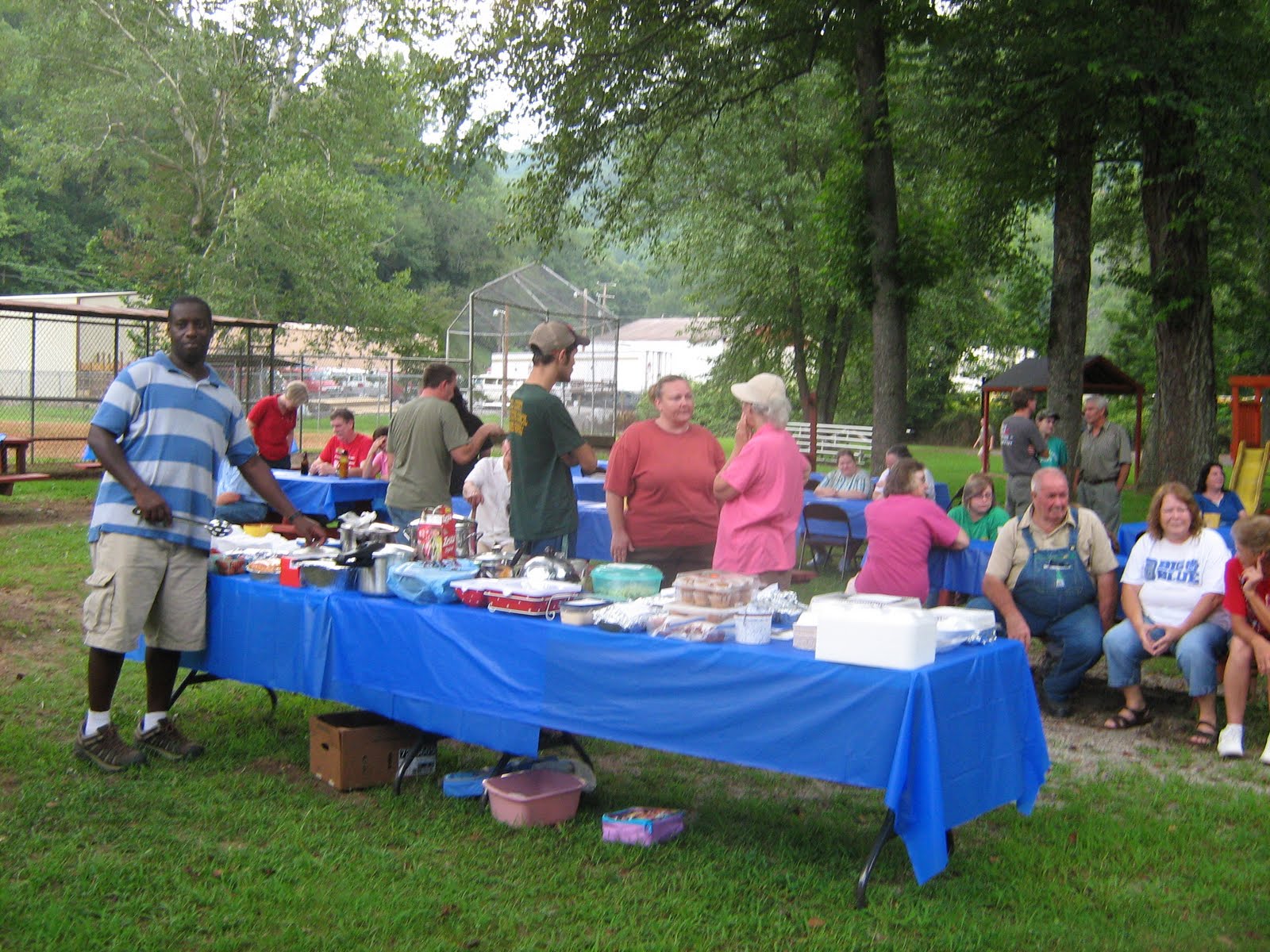
                Even though the tour was a very great way to spend our day, we had tons to do back at Red Bird for the Community Picnic.  As soon as we got back, we set up everything and we were surprised with early participants.  I believe this showed the excitement for this event.  Pretty soon, everyone was arriving, bringing their fantastic garden dishes which included; garden tomatoes, various types of corn salad, bowls of chili with peppers including habanero, various types of green beans, sauerkraut, pickled beets, and much more.  Also some of the participants brought spearmint tea, which was gone after a few seconds, and fresh milk from their cows.  I felt so blessed to be a part of their great feast.  I can’t believe how good the cooking is down here!  I heard great conversations about sharing equipment and various methods people use on their farms and making new contacts/friends.  I knew that we were reaching one of our goals that GROW Appalachia had set out to do, this was the whole purpose of this event.  Participants brought their family recipes and shared excitement at trying to make each other’s dishes.  I’m hoping that they will use the recipes as a fundraising book for GROW Appalachia or maybe just share among the participants.  Then we ended the night with door prizes and some BINGO. 
The potluck from the garden

Gardeners/Farmers ready to eat

Esther Mason's fresh cow milk

               I just want to say in my last post, that I was very blessed to have this opportunity to be working with remarkable people.  They were more than willing to invite us inside when we arrived to their gardens and share their food.  I really hope that I made a good contribution to this program and through this blog, I was able to exemplify the effect that GROW Appalachia has on families in the Appalachian region, more specifically around Red Bird.  Again, these are great people.  Thank you!

Friday, August 5, 2011

The dirty word of summer: Blight ~Maggie Ashmore, Pine Mountain

The three words that sound the most like summer to me are tomatoes, sweet corn, and sunflowers. Sweet summer goodness.  Long days, humid weather, good food, and pretty flowers: summer.  My sunflower heads are starting to nod over these days, but my kitchen table is just now filling up with tomatoes and sweet corn. Welcome August!

Tomatoes. There are all different sizes of Grow Appalachia gardens, with very different vegetables planted in them, but every garden includes some tomato plants. I EVEN PLANTED SOME TOMATOES, and let me tell you a secret-I do not like tomatoes. I love the way tomato plants smell, I think that they are beautiful plants, and I am entranced by the many tomato varieties that exist, I just don’t like the taste of those big, juicy fruits. (This is especially weird considering I grew up on a farm where we grew 900+ tomato plants each summer…). But I digress, despite my apathy toward eating tomatoes; my heart still aches to see the plants afflicted with fungal diseases – “the blight”.

 Anytime we see tomato plants with yellowing leaves and brown spots we automatically diagnose our tomatoes with blight. However, there are several fungal diseases that may have infected our plants. The Grow Appalachia coordinator at Berea College, David Cooke, sent all site coordinators a link to a wonderful online resource about tomato diseases. This website, Tomato Dirt, includes information on how to distinguish between the different diseases, prevention and treatment options, and pictures. I have noticed that some gardeners do not even recognize that their plants have a disease since it afflicts their plants EVERY YEAR. These gardeners see the early death of their plants as the normal life cycle of the tomato plant, and it most gardens it is. We would do well in the future years of Grow Appalachia to educate about tomato blight, with good visual aids, early in the season.

This post is long overdue, as “the blight” has already overtaken most of the gardens I have seen, but it is not too late to learn and plan prevention techniques for next year. There are a few gardeners out there who still have beautiful plants and may still be able to hold off these diseases by using an organic fungicide and keeping their plants pruned.
Look at these beauties! No blight as of August 2nd!

Here are some pictures from Pine Mountain Grow Appalachia gardens.  Half of the gardens we have been working in seem to have spot patterns that look like Septoria while the other half have Early Blight. Both diseases attack during humid weather (summer in Kentucky anyone?) and the treatment plan is the same. Some of the tomatoes I have seen this summer have been completely killed by these diseases, but the majority of plants can survive early blight and septoria for a little while, they will just not produce as much. In my experience, early blight will make your tomatoes ripen all at once, in a last ditch effort to reproduce before the plants die. So bust out the canners and preserve those tomatoes!
          Septoria in a PMSS Grow Appalachia garden                                                       Early blight in a PMSS Grow Appalachia garden

A note on cleaning off your tomato patch: I always try to burn my diseased tomato vines. Do not put diseased plants in the compost. Fungal diseases are soil born, and are probably already in your garden soil. I try  not to perpetuate the disease by creating blight infected compost. 

Wednesday, August 3, 2011

4 Season Gardening by Magan Meade

http://www.slideshare.net/magan_meade9/4-season-gardening

Here is the link to my Four Season Gardening Power Point, if you would like to use it.  Let me know if anyone has any questions.

Plan of a Year-Round Harvest by Magan Meade @ Red Bird Mission

July 25-29, 2011
                After weeks and weeks of studying and researching the “4 Season Garden”, I presented the class on July 28th, 2011.  As an intern, I have learned the value of the details in planning a presentation to the public.  Each day, getting ready for the presentation, I would find new and interesting information to add to my power point and handouts.  I learned how important and resourceful it would be to include handouts.  I wanted to leave the GROW Appalachia participants with resources that they can refer to and start a four season garden with.  My handouts included a harvest chart for a four season garden, a publication from the Kentucky Extension Office on four seasons gardening in Kentucky, and winter garden recipes that are simple and fast to make.  I also, included a survey that would ask GROW Appalachia participants about various perspectives of the program and their participation in the program.  The purpose of the survey was to give us an idea on how we can better support, GROW Appalachia participants.  
                My experience with researching Four Season Gardening has been a very interesting one.  My main resource that I followed was, Eliot Coleman’s “Four Season Harvest”.  His garden took place in Maine, which was in Zone 5 and the zone that we are working with in Kentucky is Zone 6, which means we can have a little bit more of an extended season through warmer weather.  I had to refer to the 2011 Farmer’s Almanac, which gave me the frost dates for Lexington, KY, which were April 15th and October 25th.  I also found a publication from the University of Kentucky Cooperative Extension Service, called “Home Vegetable Gardening in Kentucky”, which gave me different crops to raise in Kentucky in the other three seasons besides summer (we also gave this out as one of our prizes).  I was warned by the Eastern Kentucky University Agriculture Department and Red Bird Mission staff that it would be very important to get people in this area to like the “greens” and types of vegetables that would be grown in the other seasons.  Therefore, I included pictures of the different types of winter, fall, and spring greens and next to those pictures; I included an image of a dish that they could make with those greens.  After doing so much research, I was astounded by how much nutrition was in these greens that our previous generations had consumed.  My mother told me that my grandfather would gather dandelion greens from the yard and cook them to eat.  Come to find out that dandelion greens are better for you than the stereotyped super food, broccoli.  Each of these greens contained at least Vitamin A, C, various forms of B, and K, Omega-3’s, fiber, and were proven to prevent prostate and colon cancer, anemia, osteoporosis, and various forms of heart disease.  It seems that this is the answer American society has been looking for right in our own backyards but it would almost be a cultural change.  These super power greens included; mizuna, mache, escarole/endive, dandelions, chicory, collard/mustard greens, spinach, kale, swiss chard, argula, claytonia, parsley, and tatsoi, which are very popular in Eastern societies including Europe.

                Along with learning about these different types of greens, I had to find cheap methods for GROW Appalachia participants to prolong the seasons.  Some examples of various ways to extend the season included burlap, sheets/covers, shade cloth (can use sheer curtains), cold frames such as plastic row covers or boxes, plastic containers, greenhouses, mulching, and I told them to be inventive with whatever they may have on hand.  Resources that they can find in their own houses or yards are Kentucky cane, leaves, grass clippings, old pots and pans, storm windows, hay barrels, cinder blocks, etc.  It was amazing how much you can do with the materials you already have.  I stressed the need to be inventive and it is pretty fun.  It was also important to me to include a video on how to construct a cold frame.  The video that I included in my power point was a common man putting together a cold frame from his back yard.  I thought it was good for them to see a project like that can be put together in not a lot of time, easily, and inexpensively.  I think the most expensive item he bought for his cold frame was the vent.   He bought the vent from a hardware store for $20 that had a self-ventilating system.  

                This information did not go wasted!  We gave out prizes to help with their garden or food preserving and we also gave out some seeds that they could use for a fall/spring/winter garden.  We also made a sign up list if they were interested in any other four season garden seeds that we did not have at the meeting that we could order.  We had some people order the usual crops that they figured out that they could extend into another season and a handful of participants were willing to experiment with the greens and other crops that I had talked about, which meant a lot to me.  

                I was very satisfied with my hard work and time that I had spent on this four season garden presentation.  I hope that GROW Appalachia can take this knowledge and run with it in the program.  I reminded the GROW Appalachia participants that this was an experiment.  They may be harvesting in the middle of the winter when it is too hard to drive around these snow covered mountains. 
                I hope the atmosphere of Thursday night will carry on into our Community Picnic for GROW Appalachia and Red Bird Farmer’s Project participants on August 5th at 6:30pm.  Upon learning the goals and aspirations of GROW Appalachia’s program, we wanted to inspire a more in depth sense of community among the participants of these two programs.  In my perspective, I had not seen enough sharing of knowledge and methods of gardening and I did not see that real cohesiveness of a farming community that had once been in the Appalachian region.  So, we thought maybe to inspire more relations and support among the participants, we should at least bring them together in a social event besides their usual workshops and classes.  What better way to bring people together than food!  Not just any food but food that was raised from the hard work and sweat off of these people backs.  These truly are amazing people.  In my next blog for Red Bird, I will let you know how the event went.
                On another note, Red Bird Mission is still working hard on trying to get our Farmer’s Market going.  It still seems to be that the problem is not in the buyers but in the sellers.  A lot of people are either storing their food or giving it to their friends and families.  This past weekend, Chad Brock and I had to find some crops to sell from the campus gardens.  We had scrounged up some lettuce, spinach, cucumbers, squash, and some green peppers to sell.  It’s touching to see that this community would rather help each other through giving food than see one another go hungry.