Thursday, August 2, 2012

East KY Local Foods

Aug. 2nd.
Gardens in Floyd and South Magoffin counties are doing well although it is interesting how the wet weather has been beneficial to some of us and a bother to others. Some of our families are getting a pretty good crop of beans but most have beautiful vines and very few beans. Corn is another crop that some families are doing well with but most, not so much. The good news is that the Floyd County Farmer’s Market has opened up and the farmer’s who have had good corn crops are bringing it in. The FCFM has a local only policy which for them means Floyd and neighboring counties only. No Tennessee corn at the FCFM. Todd Howard, the market manager, said that the producer members of the Market decided they wanted to grow the local economy with a local only policy.

St. Vincent Mission’s Grow Appalachia program is a big supporter of “Buy Local” and has been working with other individuals and organizations on developing the East Kentucky Local Food Systems Collaborative. The mission of the East Kentucky Local Food Systems Collaborative is be a hub to collaborate, build, strengthen and support the eastern Kentucky food system through: information sharing, promoting, education, advocating for policy change, building markets for eastern Kentucky products.

In my opinion, EKLFSC is a great way to help the Grow Appalachia families and farmers begin moving into John Paul’s “phase two”. In fact, I know that several of the current Grow Appalachia programs have already plugged in to this resource. The movement of the collaborative has stalled in recent months but another gathering has been scheduled to reestablish and revitalize the movement. The gathering will be August 23rd at the Knott County Extension Office in Hindman. If you can come, please RSVP to Alexa Arnold of CFA at alexa@cfaky.org so she can tell the caterer. You can also check out the website at www.appalfoods.org for some history of the group and other resources. And you can copy the flyer on this post and pass it along to anyone in your area-farmers, teachers, restaurant owners, and hospital administrators-anyone who might be interested in building a healthy food system in eastern Kentucky. 

Here’s the flyer. Hope to see you there. Sr. KC.

Monday, July 30, 2012

GARDEN OF A MILLION DREAMS

Hello everyone.  This is Alex Sanders from Project Worth Outreach.

Project Worth Outreach held our latest meeting on July 23 followed by a cookout.  We had lots of good garden food at the cookout that was grown by our participants in their garden.  We had approximately 60 people in attendance.  We had several participant's turn in some impressive harvest numbers for the month of July.  Most everyone seemed pleased with the progress of their garden since we had received several days of rain.  In recent weeks I have visited every garden site in our program and I must say that the gardens are looking pretty good. 

Below you will find a statement from one of our youngest gardeners who also happens to be my nephew.  He told me how much he enjoyed writing this blog post and I told him that was really interesting and I expected him to make more post in August and September.  I hope you enjoy his post.

After Ben's post please find this week's recipe.  Hope everyone has a great week.
Ben Hall


GARDEN OF A MILLION DREAMS

Hello, my name is Ben Hall.  I am a participant In the Project Worth Outreach/Grow Appalachia Gardening program.  I am 11 years old. This is my first gardening experience ever. When I first was told that I was going to be a part of my very first garden I was very excited. The very next day after I was told, I went to school & started to tell my friends & ask if they had a garden. After I found out what they were growing I told them the things that I knew that we would be growing, such as green beans, potatoes, lettuce, peas, & a bunch of spices. My teacher had just finished teaching us about how the Native Americans & the Pilgrims had bartered when they wanted to trade crops. Then at about the end of the school day, my friends & I started talking on the bus about things that we could barter since my family absolutely loves corn & we weren’t growing any corn, I asked some of my friends that were growing corn if we could barter some green beans, or something that we were growing that they weren’t.

  On the first day, we started setting up some supplies that we would need for the garden since we were going to have a raised garden. We had to set up wooden beams to predict the size of the garden plots that we would plant. The first ones that we set up were the longest sections so we wouldn’t have to worry about that. Then we set up the smaller sections that we would be planting in. After that we took a little break to eat lunch, & after we came back from eating lunch, we put down landscape plastic in every section that we were using. After the landscape plastic was intact, we cut little holes for the seeds to grow. When we finished that, we started to put down the soil that we needed. We filled almost every section then we ran out of soil. After we ran out of soil, we just called it day as my uncle Alex Sanders went to get more soil.
 After we got all the soil in, we started to plant the seeds. The first types of seed that we planted were pea seeds. Then as we got them in, we planted more & more seeds. After we got the green bean seeds in the mail, we planted those. Then we planted potatoes, and then when we got them in, we planted lettuce, cilantro, & other spices like tarragon.
 Some of the funny things that have happened to our garden are that first we got kind of dirty putting in the soil which was fun, then we developed a big problem with cats pooping, & running through our garden. After we found out what our problem was, we put of some chicken wire to keep all the animals out of our garden. After we got rid of the cats, the weeds became not a huge problem but one that we needed to get rid of very quickly. So as soon as we started to see weeds, we started to pull them. We pulled weeds for about a week then the weeds started to die down & that was the last we saw of the weeds for a few weeks. After about 5 weeks with no weeds, they came back, but before we realized that we had weeds, I started to trip over some over grown weeds. Then my uncle Alex Sanders bought a sprinkler & we played in it a lot sometimes after we finished our garden work for the day.
 After a few months of having a garden, we started to get things that we could harvest such as green beans, lettuce, & potatoes. To me, planting & picking were the best parts of the garden. I know that a garden is a lot of work but it all pays off in the end if you get any fresh garden food out of your garden. This was my first experience with a garden but I hope that I can definitely get more green beans, potatoes, & other fresh foods out our garden this year. Some things that I would like to grow next year would be the three sisters which is corn, green beans, & squash all together & I would also like to grow watermelon next year as well. I hope that we can grow a garden every year for the rest of my life.

This week's recipe:

Quick Zucchini Cake W/ Cream Cheese Frosting

Cake                                                      Frosting
1 box yellow cake mix                         1  8 oz. pkg. softened cream cheese                                         
4 eggs                                                  1  box powdered sugar                                  
1/2 cup vegetable oil                           1/2 stick margarine {softened}                     
1 table spoon vanilla                            1 teaspoon vanilla
1/2 cup raisins {optional}                     chopped nuts              
1/2 cup chopped nuts
1 teaspoon cinnamon

Beat cake mix, eggs, oil,                     Beat cream cheese and margarine
cinnamon and vanilla                          until smooth.  Add sugar and mix well.
together in large bowl                         Add vanilla and beat until smooth.
for 6-7 minutes.  Fold in                      Spread on cake.  Add pecans on top.
zucchini, raisins and nuts.
Grease and flour a 10 inch
tube pan or bundt pan.
Spoon in batter, bake at
350 degrees for 40-50
minutes for doneness.
Cook until toothpick comes
out clear.  Top with cream
cheese frosting. 

I submit these recipes as given to me.  Please feel free to substitute healthy ingredients whenever possible.

Sunday, July 29, 2012

Scott County Grow Appalachia

 Potato Seed Pods 


images-3.jpegAt one of my site visits, a participant handed me a cluster of small tomato fruit that she found growing out of her potato plants.  "What is it?", she asked.  Even after growing potatoes for many years, she had never seen anything like it before.    Maggie from Pine Mountain told me that they are seed pods.  

When potato plants have flowered, some varieties will produce small green fruits that resemble green cherry tomatoes.  These pods contain up to 300 true potato seeds.  When the pods become soft, the seeds can be harvested by finely chopping the pods and soaking  them in water.  The pulp and seeds will ferment, the pulp rise to the top and seeds will fall to the bottom. After rinsing and drying the seeds, they can be stored in a cool place until they are ready for planting in the spring.


Although potatoes can be grown from seed, most people grow potatoes from tubers, because potato seeds may not produce the same type of potato that the seed came from.  They may produce a wide array of potatoes which may or may not have a good flavor or texture.  Also, potato seed pods contain large amounts of alkaloid solanine and are poisonous to eat.

    Garden Participant of the Week  - Mrs. Lackey

SDC10274.JPG.jpg


"I am a wife, mother to six children, grandmother to three grandchildren,  I attend St. Jude Catholic church. I enjoy gardening, quilting, sewing, making rosaries that I send several Priest in Uganda  for orphans, sick and elderly folks. I love being outdoors in my garden.  When I work in my garden although it is work I find it helps me relax and I find myself thinking of everyone I promised to pray for, I grow my garden because I want healthy foods for my family and friends.  I know exactly where my food is coming from and what goes into that process."                                                                              


Mrs. Lackey volunteered at the health fair.


SDC10265.JPG.jpg
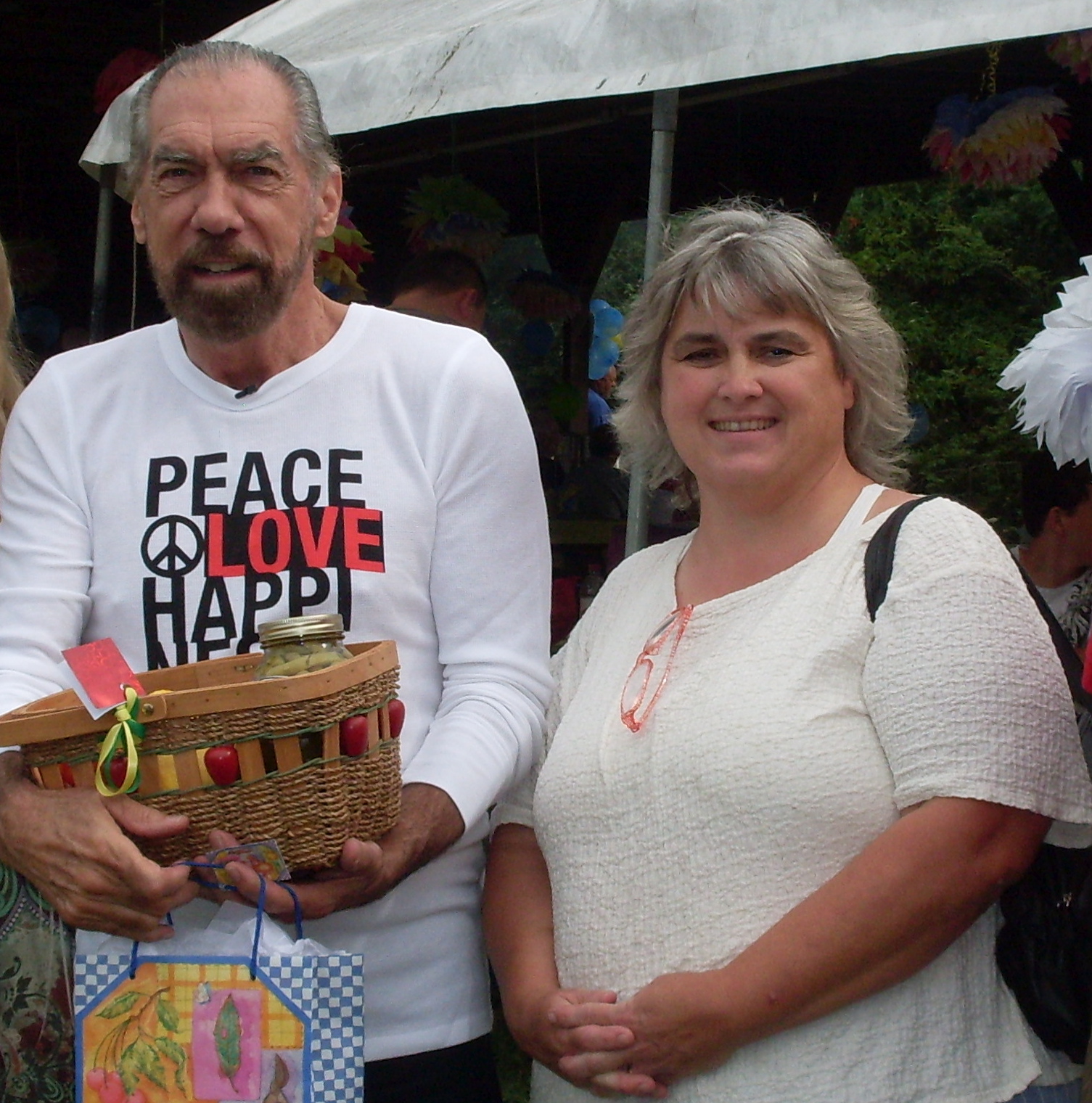
Mrs. Lackey met John Paul Dejoria at London, Ky gathering


Friday, July 27, 2012

A Good Hay Day and a Rabbit-Proof Fence -by Erica at High Rocks

Stylishly dressed for the office, the managing editor of the Pocahontas Times, Jaynell Price-Graham, climbed up on her old John Deere tractor to expertly place a round bale of hay in our truck.  Just another example of the varied talents found in the people of our county!  We delivered this donated mulch hay to four participant gardens.  It felt good to cover the bare ground before the heat of late summer sets in.

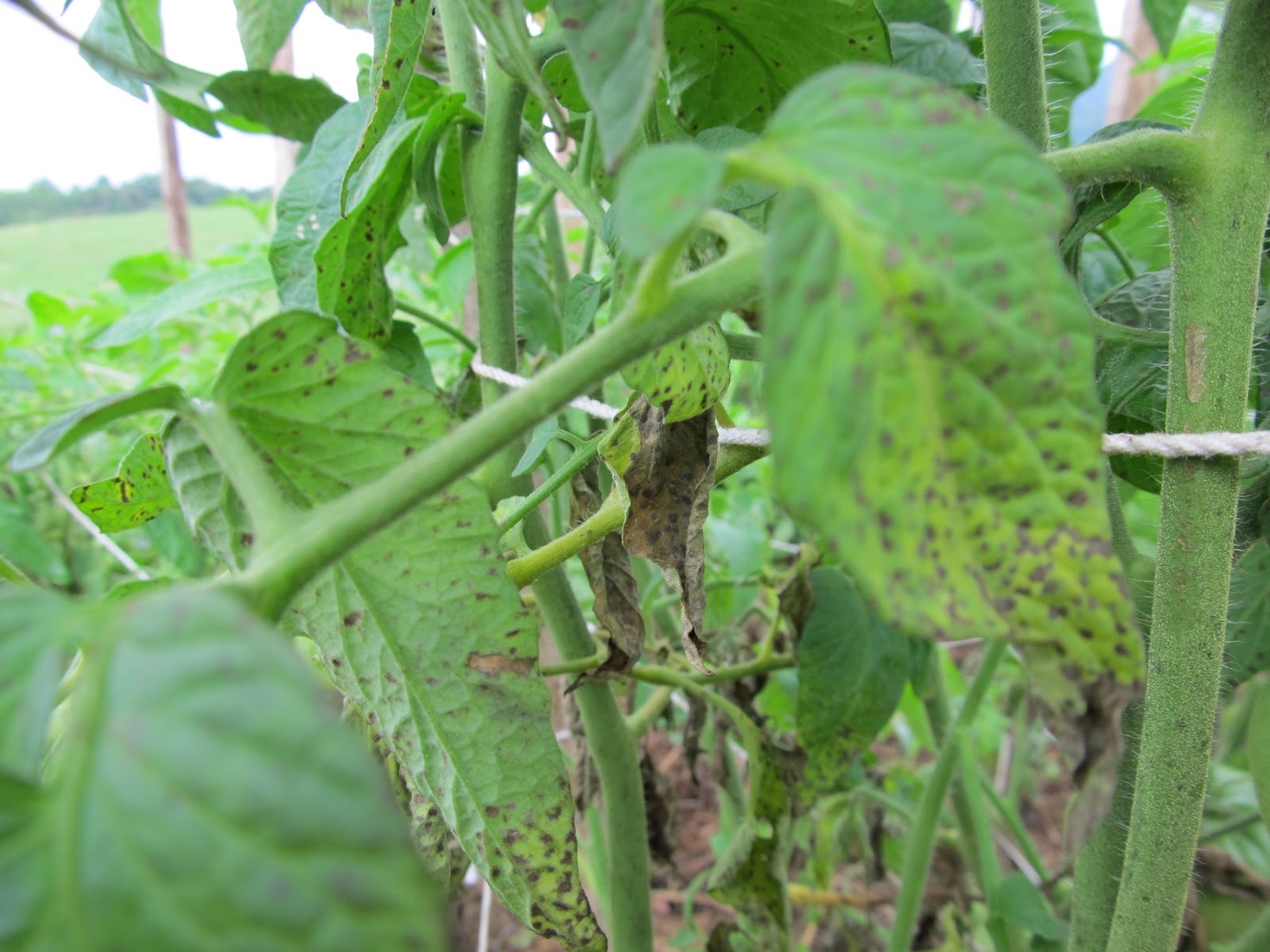
We also sent of some samples of some spotty tomato leaves to WVU for culturing and diagnosis.  We didn’t see late blight here last year, so we are hoping for good news.  In the meantime, we’ve advised our gardeners to use Serenade preventatively. 


Today we visited the community garden at the Family Refuge Center Shelter to deliver rabbit fencing.  Their garden looked lush and well-cared for.  The FRC Shelter is a temporary home for families who are victims of domestic violence.  The children who recently stayed at the shelter were enthusiastic green bean pickers.  Some never before had green beans that didn’t come from a can.  Brenda, their garden coordinator, said she had a glut of summer squash and the families staying there weren’t eating it.  She took it to a local restaurant and sold it for $10—money that will go back into the shelter’s operating budget.  As we stretched the fence around the perimeter, she showed us the watermelons and pumpkins that the Girl Scouts started and planted—a future treat for families in need of a little more sweetness in their lives. 


A Veteran Gardener's Way of Freezing Corn: Tina

From the Hoskins Garden with the LCAAHC. This year our corn did not produce very well, the ears were small and many were not filled out all the way. We bought the Peaches and Cream variety. We planted 4 rows in the Spring and only got 16 quart bags out of it. But we are thankful for what we got, according to the news, many corn fields have withered and died due to the drought and heat. I learned how to put corn in the freezer from my veteran gardener, Mother in Law. Her Mother taught her this way many years ago. It is a method that retains more of the vitamins and flavor because you are not pouring out the water from the boiled ears of corn. First you start with clean corn with all silks removed. Then in a big bowl, cut off all the corn and scrape the cob.


Next in a large skillet put the corn and add only a SMALL amount of water to keep it from sticking to the pan. Cook on medium-high heat for 3 minutes, stirring and turning corn constantly to keep it from sticking. Almost all of the water should have evaporated out by the end of 3 minutes.


Then pour into a large bowl and place in ice water bath and cool completely. Stirring it occasionally to release the heat and steam.


Then spoon into freezer bags. I like to lay mine flat on the counter and I fill them to get more room in the freezer.


There are many ways to put corn away but I thought I would share my way with you as well. Were hopeful that our late crop of 4 rows will produce more or else it's slim pickin this winter.
Enjoy!

Peace, Love & Happiness – Red Bird Mission


   Greetings from the mountains of southeast Kentucky.  It’s been a busy couple of weeks for us and we got a little behind on our blogging.  We apologize.  I have been loving your entries the last couple of weeks.  I wish to express my appreciation to Constance for getting John Paul’s speech on “the tube.”  I thought I was recording it on my phone – NOT! 
   As a child of the 50s and as a teenager in the late 60s, I totally resonated with JP’s speech as well as the name of his foundation.  He reminded me of my days living just north of San Francisco during the make love not war era.  As members of the Grow Appalachia family we have such a blessed opportunity to touch people’s lives and to be transformed by their lives as well.  Peace, love and happiness are contagions.  When someone treats us with the true love and care that God desires to see in us, we can’t help but share it.  And like the ripple effect of throwing a rock into a still pond, the effect (ripples) are carried on…and on….no matter how minute the stone or act of kindness is. 
   So my word of encouragement this week is this- YOU are valuable.  Your work is valuable.  Every seed you plant, every drop of water you drip, every person you help, matters and is changing the world for the better. 
    Yesterday we had our annual Tri-County Health & Resource Fair at Red Bird Mission.  And as I was hauling tables and boxes from one building to another (in the 1,000 degree heat and humidity I swear) I wasn’t necessarily thinking that way.  The work we do in ministry to others is sometimes all-consuming and physically exhausting.  BUT WE ARE MAKING A DIFFERENCE!
   I wanted to tell you how much I appreciate all that you do – all of you.  And I am honored to be a part of this awe-inspiring movement.  Thank you John Paul, Constance, David and Tommy (for throwing it out there), for bringing this “family” into being.  Grace & Peace - Karen Dial

The Grow Appalachia Influence goes International~ Pine Mountain, Theresa Osborne


This post was written by Theresa Osborne. Theresa, her husband Mitch, daughter Valerie, and numerous other family members have been involved in Grow Appalachia at Pine Mountain for 3 years now. The Osborne's are a dedicated GA family that is always excited to learn new gardening, cooking, and agricultural skills. We were very excited to hear about their recent success sharing Grow Appalachia skills abroad, and as always we are very happy to have them involved in our program!
-Kathleen

      This summer my family and I got the opportunity to take Grow Appalachia, international. The first two weeks of July Valerie, Mitch and I went on a mission trip to Belize Central America. We have been going to this rural farming village of Mafredi for about 12 years and we have made some great friendships.
Mafredi Belize has a lot in common with Appalachia. It is in the southernmost district, it is an area not frequented by tourists and it has high unemployment and poverty rates. Historically families had lived off the land with jobs providing supplemental income. Each Wednesday and Saturday morning the main town in the area, Punta Gorda, has a market street filled with vendors selling fresh produce, spices, herbs, and even fresh shrimp and fish. As we planned for our trip we wondered if there was something from Grow Appalachia that we could share with our friends in Belize.
     With that in mind, we bought a pressure canner and packed it into our luggage, and got a copy of the parts list and blue prints for building a PVC pipe chicken tractor. When we arrived I started asking our hostess Mrs. Deena Parham if she thought the women of the village would be interested in learning to can vegetables. She said she didn’t think so, because most people preferred fresh vegetables from the market. I felt a bit discouraged because we had gone to such expense and planning to get a pressure canner into the country.
Salsa preparation
    Then I noticed that she was using commercially canned salsa in some of her recipes. I asked Ms Deena, if she would like to learn to make her own homemade salsa and pickles (cucumbers are usually abundant). Her husband, Mr. Jerry, said he loved pickles, but couldn’t afford them. We looked in town and small jar of pickles was around $12 Belize, or $6 US. So we made plans to have a pickle and salsa workshop.
   We set about gathering our ingredients. Our one challenge turned out to be finding the dill for the pickles. Evidently there are only a few of the immigrant families that actually grow it. It took us a few days but we finally found enough dill for our project. On that Saturday afternoon, Valerie and I gathered in Ms. Deena kitchen with three other village women Ingrid Gonzales, Carla Rodriguez, and Rosa Parham to make pickles and salsa.
They were all fascinated with the process. When we finished making the dill pickles, they kept asking, “Is that all there is to it?” They were very excited about tasting the product in the next week after the jars had had time to “Pickle.” Then we started on the homemade salsa, a little more labor intensive process. But we quickly began to laugh and talk as we chopped fresh jalapenos, cilantro, onions, and scalded tomatoes to remove the skins.
Carla with some of the finished salsa and pickles
    We actually got so involved in talking that we ended up with about four times the amount of jalapenos that I usually use in this recipe. Ms. Deena kept assuring us, “Those peppers don’t burn. They just add flavor. I don’t think it is going to be very hot.” Valerie and I looked at one another and were pretty sure this was going to be an EXTRA hot batch of salsa. As we began to cook it, we pulled out spoons for taste testing. When Mr. Jerry came in we gave him a sample taste. He described it as “Devil Juice.”  We worried that maybe it was too hot, even though most Belizeans prefer very spicy food.
That evening at supper, we opened a jar of the salsa for everyone to try. It was a great hit, and had just the right amount of heat they all said. Even Ms. Deena had to admit that it had heat as well as flavor.
Trimming bamboo to fit in PVC pipes

    We have been so happy with our family’s chicken tractors; we wanted to share that idea with the village. At first it didn’t seem like the idea was going to go over well, but we forged ahead anyway. At home we had used metal conduit inside the PVC to add strength to the structure. In Belize, the high cost of metal conduit called for us to come up with a Belizean alternative. We still wanted to use PVC pipe, even though it was pretty expensive, because termites are a real problem for anything made of wood. But, we decided that bamboo sealed inside the PVC pipe would work to add needed strength. So we asked one of our workers and long-time friend Isadoro Sotz to go into the bush and chop us some bamboo that would fit inside our one inch PVC. It took a little trimming, but it fit right inside the pipe, and provided plenty of strength.
     It took several days to build the tractor because we were doing other work, but we were ready for the roof by the time we left. We left it up to the community whether to put a metal or palm thatch roof on it. But we added extra wire over the area where the roof would go just in case they decided to put a thatch roof for extra security.
Valerie and Isadoro putting wire on the chicken tractor
    We decided that we would give this chicken tractor to the village school to help with their feeding program. They could eat the eggs, sell the eggs, or raise meat chickens to eat using the tractor. Isadoro became very interested in the tractor idea, as did our host, the school principal and a Pastor friend of ours from a neighboring village. They all wanted copies of the plans so they could build their own chicken tractor and show others. Carla Rodriguez also wanted to see about building one for her chickens. Her father has an organic farm and she raised her chickens there and was having a hard time keeping up with them and finding the eggs.
We have been asked that from now on, whenever we come back the villagers want to do more of these food preservation/preparation workshops. All in all it was a great sharing experience, and one we would not have had if not for our participation in Grow Appalachia.