Showing posts with label High Rocks. Show all posts

Sunday, October 14, 2012

Frost on the Pumpkin ~by Erica at High Rocks

Frosty mornings and starry night freezes.    Hot sunshine and cold autumn breezes. 
Digging potatoes, whites, golds, and reds.  Coiling the hoses in garden sheds.  
Harvest, prepare, preserve, and bake.  Cultivate, cover, sow and rake. 
Field peas and rye, straw bales, and clover.  The beets are sweeter but the melons are over.    
Light a fire and share a toast.  Hot apple cider and sweet pumpkin roast.
The pantry is full for the season of snows, and gardeners grateful
for an Appalachia that Grows. 


Or, in the finer words of the James Whitcomb Riley  (1853-1916)...
"When the Frost is on the Punkin"


WHEN the frost is on the punkin and the fodder's in the shock,

And you hear the kyouck and gobble of the struttin' turkey-cock,

And the clackin' of the guineys, and the cluckin' of the hens,

And the rooster's hallylooyer as he tiptoes on the fence;

O, it's then the time a feller is a-feelin' at his best,
With the risin' sun to greet him from a night of peaceful rest,

As he leaves the house, bareheaded, and goes out to feed the stock,

When the frost is on the punkin and the fodder's in the shock.

  
They's something kindo' harty-like about the atmusfere

When the heat of summer's over and the coolin' fall is here—
Of course we miss the flowers, and the blossoms on the trees,

And the mumble of the hummin'-birds and buzzin' of the bees;

But the air's so appetizin'; and the landscape through the haze

Of a crisp and sunny morning of the airly autumn days

Is a pictur' that no painter has the colorin' to mock—
When the frost is on the punkin and the fodder's in the shock.

  
The husky, rusty russel of the tossels of the corn,

And the raspin' of the tangled leaves as golden as the morn;

The stubble in the furries—kindo' lonesome-like, but still

A-preachin' sermuns to us of the barns they growed to fill;
The strawstack in the medder, and the reaper in the shed;

The hosses in theyr stalls below—the clover overhead!—

O, it sets my hart a-clickin' like the tickin' of a clock,

When the frost is on the punkin and the fodder's in the shock.

  
Then your apples all is gethered, and the ones a feller keeps
Is poured around the cellar-floor in red and yaller heaps;

And your cider-makin's over, and your wimmern-folks is through

With theyr mince and apple-butter, and theyr souse and sausage too!...

I don't know how to tell it—but ef such a thing could be

As the angels wantin' boardin', and they'd call around on me—
I'd want to 'commodate 'em—all the whole-indurin' flock—

When the frost is on the punkin and the fodder's in the shock.

Sunday, October 7, 2012

Joining the Grow Appalachia Team ~by Marlyn at High Rocks

Hello. My name is Marlyn McClendon and I am the latest Grow Appalachia AmeriCorps member here at High Rocks this year.  I am a native of WV and one thing that I love about my state is the changing of the leaves at beginning of fall. There’s hardly a place you can go without noticing the indulgent purples, golden yellows, and burning reds covering the mountainsides.

The past few weeks have been a whirlwind, with job trainings, workshops, tutoring and our Nettlefest Fundraising kicking off the beginning of the volunteer year. My first two Grow Appalachia workshops were really inspiring because of the contagious enthusiasm from our Grow Appalachia participants and High Rock girls who attended.


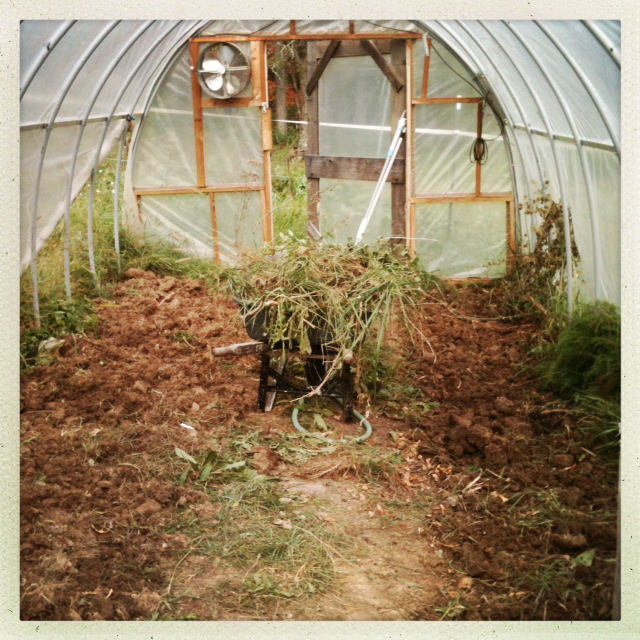
As of right now, all my attention is going into the high tunnel here at High Rocks. I’ve been loosening soil and getting the beds ready to plant some greens for the winter. One of our goals is to use mostly local produce in the meals we serve at High Rocks and to keep the girls learning about and practicing healthy/local food choices.


I look forward to my year with Grow Appalachia and seeing the progress we make towards growing our own food in our families and communities!


Sunday, September 30, 2012

More Fun with Vegetables ~by Erica at High Rocks


Pocahontas County is growing a lot of food these days.  So much, that people are starting to get creative with it.  Some might even say strange.  We’d like to share another recipe from the High Rocks Grow Appalachia Test Kitchen and spotlight some veggies that found fame at a local festival. 

We held our healthy cooking class at High Rocks on Tuesday and lots of teens prepared and ate sushi for the first time.  Appalachian Sushi that is…
Appalachian Sushi 
(no, really…it’s good.)
2 cups of cooked rice
¼ cup apple cider vinegar
1 tsp  salt
 1 cup cooked butternut squash cut in strips
½ cup chopped walnuts, almonds
2 minced garlic cloves
½ medium onion diced
½ cup cabbage diced (can also add/ substitute diced collard stems)2 tbs soy sauce (or Braggs)
¼ cup crumbled blue cheese
 8-10 large collard or chard leaves, steamed
 
While rice is cooling, stir in vinegar with the salt dissolved in it.
Sauté the onions, cabbage, nuts, garlic in olive oil and butter until onions and cabbage are soft.  Remove from heat and add crumbled blue cheese.
 
Cut steamed leaves down the center vein.  Make a 1inch line of rice and nut mixture at the end of a halved leaf.  Add 1 or 2 strips of butternut squash.   Roll as tightly as possible from the filling end.  Cut the roll in to 1in. pieces with a very sharp knife. 


Participants also made Appalachian Humitas—something like a tamale, but with fresh local corn (see our earlier post).  Both recipes were hits!  We also made impromptu butternut squash French fries with a dash of cinnamon which pleased even the most discriminating palettes.   


Food took center stage again on Saturday for the town of Marlinton’s Road Kill Cook-off and Harvest Festival.  High Rocks Grow Appalachia was there sponsoring a produce pageant.  Winners got vouchers to spend at the Marlinton farmer’s market.   I’ll let the contestants do the rest of the talking.  Enjoy. 


Sunday, September 23, 2012

Salsa! ~by Erica at High Rocks

 
“They feel just like eyeballs!” said the teenager with her hands buried deep in just-blanched black plum tomatoes. Was she preparing a feature for a haunted house? No, but not a bad idea!

“I don’t eat things like this,” said another. These girls were up to their hoodies in fresh tomatoes, onions, garlic and herbs at the High Rocks Grow Appalachia “Preserve the Bounty” workshop this week.

They joined Grow Appalachia participants in learning about dehydrating, water-bath canning and pressure canning. At the end of the night, jars of preserved whole tomatoes and salsa lined the counters. All the girls, even the ones who “only like Tostitos salsa” were attacking bowls of the stuff with chips.

The empty bowls and their evaluations of the workshop attested that it was“Awesome.”


Sunday, September 16, 2012

Wild Appalachian Medicines ~by Erica at High Rocks

Janet Kent
Dave Meesters


This Sunday at the Pearl S. Buck Birthplace we were treated to a presentation by Medicine County Herbals about 10 Appalachian plants and their medicinal uses.  Janet Kent and Dave Meesters passed around and discussed preparations that they had wildcrafted from plants available locally:  yarrow, stinging nettle, joe pye weed, to name a few.   Wild grown medicine used to be the only medicine around, so we got a Ancient Greek history lesson as well.  Achilles was said to have learned from a centaur about using yarrow to staunch the bleeding of battlefield wounds.  (Hence the genus name of yarrow, Achillea.)
 Walking in the Appalachians is good medicine in and of itself.  Janet explained that an important part of wild medicine is actually the act of collecting it yourself.  Going out into the environment where these plants live can begin the healing process.  We learned about warding off allergy attacks (ragweed tea), dissolving kidney stones (joe pye root), and calming coughing fits (black cherry bark tea).    We also learned about collecting the wild medicines safely and responsibly: ensuring proper plant identification, leaving sustainable stands of the plant in the wild, and avoiding polluted areas while collecting.  Our participants now know they can look beyond the boundaries of their vegetable garden to nature's wild garden for better health and nutrition.  


Sunday, September 9, 2012

Hoop Dreams ~by Erica at High Rocks


One of our first time gardeners, Clay, is jumping through hoops to grow as many vegetables as possible.  Clay grew up in Pocahontas County, WV, graduated from college, lived in Korea, and has moved back with a plan to coax food out of his home soil all year long. 
He hosted an old-fashioned barn-raising this weekend, with a new twist.  His friends and neighbors came out to put up the skeleton for a hoop style high-tunnel.  Inspired by Eliot Coleman’s The Winter Harvest Handbook, and his parents’ successful homesteading ways, Clay (on the yellow ladder) intends to grow greens during our Zone 4 winter.   And, he intends to do it without electricity on his site.  This summer, he built a rain collection system for the roof of a nearby barn for the high tunnel. 
Having fresh greens in the winter is a big deal for people in the Hillsboro area as the nearest grocery stores are a long, twisty drive away.   He hopes to market his produce to area restaurants and families. 


Friday, August 31, 2012

Events and Celery in Pocahontas County, WV ~by Renae

We have scheduled (and rescheduled) our last events for the growing season.  We are excited to be doing three of them with our High Rocks girls helping and learning along with our participating families. 

UPCOMING EVENTS in Pocahontas County

Tuesday, September 18 5:30-8:30 Preserving the BountyWater bath and pressure canning...dehydrating...smoking...freezing... Learn about and try some of the many ways to keep eating out of your and your neighbors' gardens all year long. This workshop will be at High Rocks.

Sunday, September 16 2:00 pm  Medicinal Plants
Medicine County Herbals presents 10 medicinal plants of Appalachia: How to identify them.  Where to find them.  How to use them.  This workshop will be at the Pearl S. Buck Birthplace. 
 Tuesday, September 25 5:30-8:30 Healthy Baking and Cooking Bake, roast, and steam your way into good health and great eating using seasonal produce. Advance recipe suggestions welcome! This workshop will also be at High Rocks.
Saturday, September 29th (afternoon) Harvest CelebrationThis is an event you won't want to miss! We will be at the Opera House in Marlinton with all kinds of goodies for you--knowledge, seeds, garlic, music, potluck, and even a local produce pagent! This event is happening along with the fabulous Roadkill Cookoff and Harvest Festival and High Rocks' annual NettleFest. If you know of any families in the Hillsboro or Marlinton areas who would like to be a part of Grow Appalachia next season, this would be a great thing to invite them to so they can learn more about us! More details to follow about the timing of all of the events.
CELERY
Even with the challenges from the weather and animals, there has been great success in almost all of our participating gardens. One of our participants over by Snowshoe Mountain grew some very impressive celery from seed. The height and thickness of her celery plants is incredible. We have not had much luck with celery, we were glad to see that someone had.


The Corn Post ~by Erica at High Rocks


With the presidential campaign heating up, there’s a lot of talk about the American Dream right now. Today, after biting in to the first ear of corn I ever grew, I am pretty sure I am living it.

Scientists believe that people living in Northern America began cultivating ”corn” more than 7000 years ago. By saving the kernels of the best examples of teosinte, a wild grass, for many generations, corn or maize became a staple of the aboriginal diet in the Western Hemisphere. Now, a starting material for several fuels, animal feed, and found in many processed foods, it’s hard to imagine modern life without it.

Much has been written about the exquisite joy of eating fresh corn on the cob, so I won’t add to that canon. Instead, I researched some alternative uses for the parts of corn we don’t usually eat.

What to do with the rest of the corn plant?
  • Scarecrows! The husks are the stuffing as well as the covering for the head and the stalks make the arms and legs.
  • Dry the leaves and stalks, grind them and use as mulch. This material is great to keep strawberries dry and off the ground while retaining moisture for the roots.
  • Compost. This takes a while, up to 6 months if the plant isn’t chopped up. One way to chop: stuff everything in a bucket and attack with a string trimmer. Add good nitrogen sources like grass clippings to offset the heavy carbon load.
  • Craft projects: corn husk dolls, placemats, votives, trivets…
  • For the serious crafter or back-to-the-lander, take inspiration from Native American uses of maize: moccasins, bed mats, floor coverings…

Healthy Appalachian Humitas

Straight from our Grow Appalachia “test kitchen,” this recipe is inspired by the Peruvian version of tamales called humitas (oo-ME-tas). Rather than use corn flour as in tamales, humitas use fresh corn and are steamed. We adapted the recipe to account for the differences in our sweet corn and South American corn, “choclo.” Also, we substituted ingredients that are easier to come by and got rid of the generous helping of lard found in authentic ones. They are fun to make and eat—when you wrap the filling in the corn husks they look like little presents!

Ingredientes:
5-6 Ears of fresh corn in the husk
1/2 cup grated cheese (I used monterey jack)
1 fresh green pepper (sweet or hot, you decide)
1 tsp cumin powder
1 clove garlic
1 cup cornmeal
¼ cup milk
1 egg
1.5 tsp salt
1 tsp cumin powder

  1. Carefully shuck the corn to preserve the inner husks and cut the kernels off with a sharp knife.
  2. Combine all ingredients in a blender or food processor. The mixture should somewhat hold its shape in a spoonful. Add more cornmeal if it’s really runny or more milk if too thick.
  3. Overlap the thick ends of 2 husks by about 3 inches to make a little boat. Spoon in as much of the mixture as your little boat will hold. Fold over the ends and tie with a skinny strand of husk or leaf of corn. This takes a little practice, but even our messiest ones turned out fine.
  4. Steam for 30-40 minutes tightly covered in a steamer. I layered mine about 4 deep and they seemed to cook evenly.
  5. Cool slightly unwrap, and eat. (not the husks)

This recipe made 25 slightly savory, basic humitas. They could also be filled with raisins and cinnamon for a sweet treat or spiced chicken and pork for something heartier. You would just nestle a small spoonful of special filling into the corn mixture in each one. Experiment and enjoy the American Dream!

Thursday, August 16, 2012

Meals on Wheels? ~by Erica at High Rocks

Sometimes cucumbers just get away from us.  A few days without picking and you can end up with a pithy, over-ripe monster on your vines.  What’s to be done with such a thing?  The Jacox community of Pocahontas County, WV has an answer.  NAS-CUKE!  Using recycled materials, they transformed cukes, zucs, and squash into racing machines this weekend in the first annual produce race.    Grow Appalachia-sponsored cars made a strong showing and their drivers ended up winning a slice of the prize chocolate zucchini cake. 


Monday, August 13, 2012

Great food, great kids. ~by Erica at High Rocks

 
This week we visited the Marlinton Middle School garden to weed and lay donated sawdust in the paths.  Principal Joe Riley met us at the garden and shared his excitement about the project.  This lush garden will greet students when the return to school in two weeks.  

We helped out beginning gardener Lori with weeding, harvesting, and preparing the site for a new fence while sunflowers watched approvingly.   Her sugar-baby watermelons are coming in and we helped her pick two pecks of beets and carrots which she is planning to freeze and enjoy roasted this winter.   

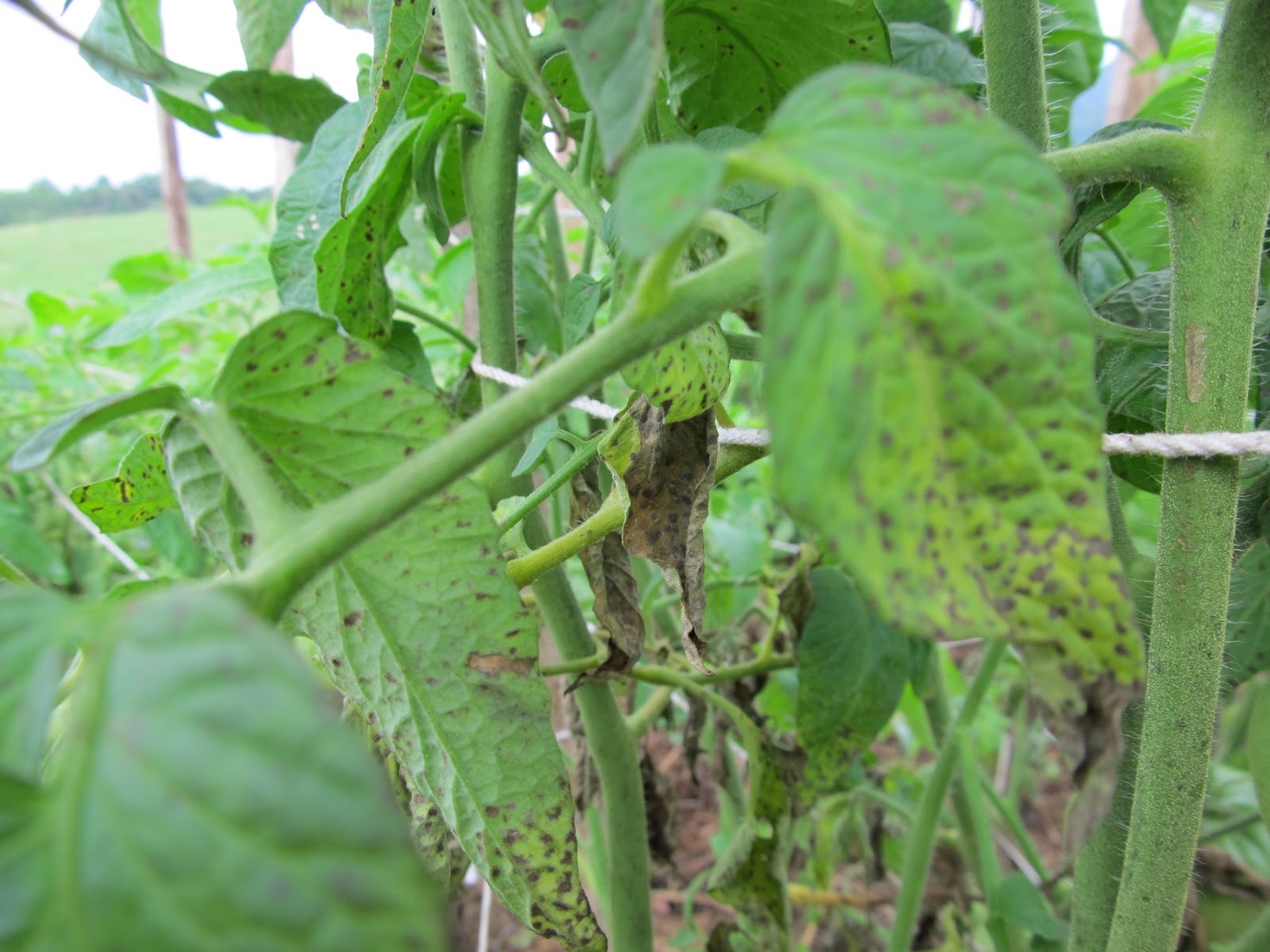
We visited Vanessa's 2nd year Grow Appalachia garden where her daughter helped her spray a homemade concoction of garlic, cayenne, and soap to ward of those that would eat her bean leaves.   We worried that late blight had gotten her tomatoes, but the diagnosis from the WVU extension office was septoria leaf spot and fruit anthracnose—not great, but at least she can still get some tomatoes from infected plants.  We sprayed Serenade on the tomatoes to check the spread.  Our wet nights and misty mornings haven’t made for the best conditions for tomatoes recently.  Next year we will be advising gardeners to leave more space between their tomatoes and prune them to promote better air flow. 

We had fun in the Pearl Buck garden with Hillsboro Elementary students, harvesting and planting lettuce.   The kids that came to help left with ears of corn and bags of beans and lettuce for dinner that night. 


Thursday, August 2, 2012

Why We Grow Greens --by Erica at High Rocks


We rural folk shop differently than you city people.  Lots of us have to drive the better part of an hour to get to a grocery store.  We don’t like to do that too often.  Some of us are on a fixed income and we get our checks once a month.  That means we shop once a month.  (That’s why you sometimes see us hauling around 2 shopping carts once we get to a store.) Have you ever tried to keep lettuce in a refrigerator for one month?  We don’t recommend it. 

This is why we grow greens.    We think three months without a salad is just too long.

Friday, July 27, 2012

A Good Hay Day and a Rabbit-Proof Fence -by Erica at High Rocks

Stylishly dressed for the office, the managing editor of the Pocahontas Times, Jaynell Price-Graham, climbed up on her old John Deere tractor to expertly place a round bale of hay in our truck.  Just another example of the varied talents found in the people of our county!  We delivered this donated mulch hay to four participant gardens.  It felt good to cover the bare ground before the heat of late summer sets in.

We also sent of some samples of some spotty tomato leaves to WVU for culturing and diagnosis.  We didn’t see late blight here last year, so we are hoping for good news.  In the meantime, we’ve advised our gardeners to use Serenade preventatively. 


Today we visited the community garden at the Family Refuge Center Shelter to deliver rabbit fencing.  Their garden looked lush and well-cared for.  The FRC Shelter is a temporary home for families who are victims of domestic violence.  The children who recently stayed at the shelter were enthusiastic green bean pickers.  Some never before had green beans that didn’t come from a can.  Brenda, their garden coordinator, said she had a glut of summer squash and the families staying there weren’t eating it.  She took it to a local restaurant and sold it for $10—money that will go back into the shelter’s operating budget.  As we stretched the fence around the perimeter, she showed us the watermelons and pumpkins that the Girl Scouts started and planted—a future treat for families in need of a little more sweetness in their lives. 


Saturday, July 21, 2012

The Food Revolution at High Rocks --by Erica

As much as they look forward to the end of the school year, lots of teens start to get a little bored by midsummer.  Eating junk food and watching re-runs on Nickelodeon gets old after a while.  Meanwhile, a group of teens have been gathering high on a mountain side, plotting a food revolution.  Learning the ins and outs of our industrialized modern food system, visiting farms and gardens, cooking produce from the High Rocks gardens, and sharing fresh, healthy meals, the young women in the “Future of Food” class are anything but bored.   


At a two-week sleepover camp called Camp Steele, they are among a few dozen girls who are spending 6 hours a day in experiential classes that explore one topic or theme in more depth than they can do throughout the school year.  The Future of Food class engages girls to think critically about how food is produced and consumed in the U.S. and across the world.  Here are some pictures from their recent trip to Grow Appalachia market gardener, Karline Jensen’s farm where they gathered eggs from her new chicken tractors.